Leave Your Message
Explore our premier selection of marine-grade hand flags, hardware, and flagpoles designed to withstand heavy offshore winds and saltwater exposure.
In the vast expanse of open waters, communication is the ultimate line of defense against hazards. While modern vessels are equipped with state-of-the-art GPS, radar, and satellite communication systems, physical signaling remains an indispensable failsafe. Hand flags for marine and boats serve as immediate, non-electronic visual indicators that communicate status, distress, intent, and identity. Whether navigating busy harbor channels, coordinating close-quarters maneuvers, or signaling in emergency scenarios where electrical systems have failed, these tools are vital components of maritime protocol.
Historically, flags were the primary means of ship-to-ship communication. Today, the International Code of Signals (ICS) maintains strict guidelines on the use of flags to convey specific messages. Hand flags, typically maneuvered by crew members or temporarily mounted to deck railings, bridge wings, or small masts, provide rapid deployment capabilities. Their utility spans commercial shipping, military naval operations, recreational yachting, and competitive water sports, making them a staple safety and operational asset globally.
The marine industry imposes some of the harshest environmental stresses on equipment. Constant exposure to high-intensity ultraviolet (UV) radiation, corrosive saltwater spray, rapid temperature fluctuations, and relentless high winds will quickly degrade standard fabrics. Consequently, the commercial sector has shifted toward advanced polymer textiles and heavy-duty fabrication techniques.
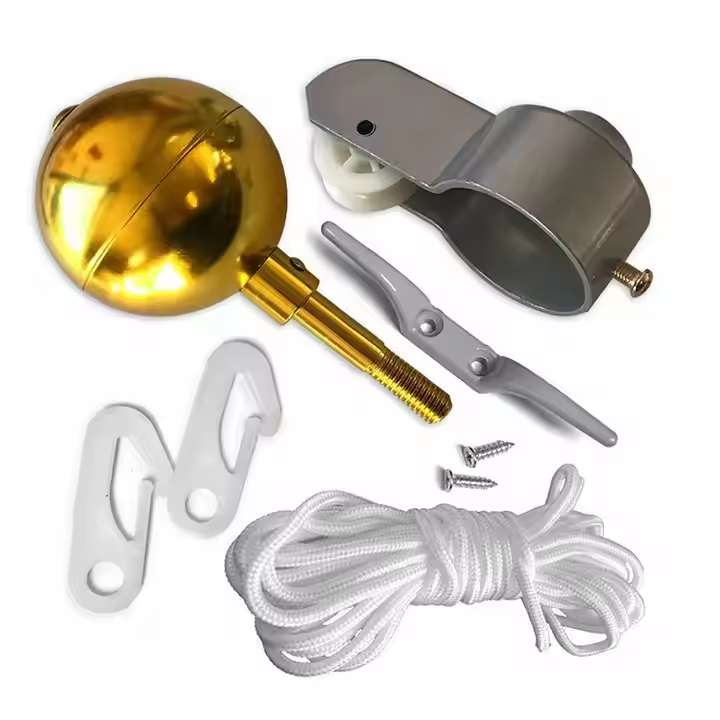
Modern manufacturers utilize high-density polyurethane-coated nylons, marine-grade spun polyester, and double-stitched Oxford fabrics. These materials are engineered to prevent fraying, resist fading, and repel water absorption, ensuring the flag flies freely even when wet. The hardware—ranging from hand-held poles to mounting rings—must feature non-corrosive properties, utilizing high-grade stainless steel (such as 316 marine-grade), anodized aluminum, or UV-stabilized plastics to prevent degradation and rust.
To survive offshore conditions, high-quality marine flags must achieve strict ratings in tensile strength, UV colorfastness (typically minimum Grade 4 on the grey scale after prolonged exposure), and low water retention. Chengdu Disitu Technology Co., Ltd. sources and manufactures products that meet these rigorous industrial requirements, ensuring longevity and reliable deployment.
Understanding where and how hand flags are deployed reveals their true significance in marine safety and coordination. Below, we analyze five core scenarios where these signaling tools are actively utilized:
During search and rescue operations, visual identification is paramount. If a vessel loses power or capsizes, electronic signaling may be impossible. Crew members use high-visibility orange, red, or checkered hand flags to catch the attention of rescue helicopters and passing ships. The reflective striping integrated into modern marine hand flags ensures they catch searchlights during low-visibility night operations, bridging the gap between survival and rescue.
In competitive sailing and yacht racing, race committee boats rely heavily on hand-held signal flags to communicate with competitors. Flags indicate prep signals, course changes, individual or general recalls, and safety warnings (such as lifejacket requirements). Because these events happen in real-time under volatile wind conditions, race officials require lightweight, ergonomic hand flags that can be held aloft for extended periods without fatigue, yet are large enough to be seen from hundreds of yards away.
Large commercial vessels, tugboats, and barges operating in congested ports require precise coordination. While radio communication is standard, visual confirmation via hand flags held by deckhands helps harbor pilots gauge distances and confirm alignment. For instance, a red or green hand flag can visually confirm to the bridge that a specific side of the vessel is clear of obstructions during tight docking sequences.
In offshore fishing, aquaculture, and oil/gas exploration, hand flags serve to mark temporary hazards, identify active dive operations (using the Alpha or Diver Down flags), or signal ship-to-ship maneuvers when deploying nets or heavy equipment. These flags must withstand oil exposure, fish slime, and constant mechanical friction, requiring specialized coatings that allow for easy cleaning and maintenance.
Naval forces often operate under strict radio silence (EMCON - Emission Control) to avoid detection or interception. In these tactical scenarios, semaphore hand flags or colored signal flags are used for ship-to-ship signaling over short distances. This ancient yet highly secure method remains a core training requirement for naval personnel worldwide, emphasizing the need for perfectly balanced, high-visibility hand flags.
CHENGDU DISITU TECHNOLOGY CO., LTD.
CHENGDU DISITU TECHNOLOGY CO., LTD., founded in 2012, is mainly engaged in display equipment, advertising printing, and customized product services. Our products include flagpoles, display stands, tents, roll-up banners, flags, customized banners, and various customized products. In the 12 years of our business, we have adhered to the concept of "professional, diligent, and service-oriented", won the trust of customers in 90 countries, established long-term cooperation, and have a large number of dealers.
We have a storage area of 2,000 square meters and a large number of inventory products to meet customers' urgent product transportation needs. We also have a professional customization team that can help customers with any customization needs. Including the customization of hardware product size, material, color, shape, as well as printing design, fabric functional selection, and printing needs.

In the long-term production, operation, and sales process, we constantly summarize the experience of production, quality, quality inspection, packaging, and service, so that we now have a lot of practical experience in the entire production process and employee training. The products we produce can stand the test of the market and better meet the needs of customers.
Ensure that the company's products or services are of high quality, high performance, and high reliability, meet customer needs and win customer trust.
Continue to carry out technological innovation, product innovation, and business model innovation to maintain the company's competitiveness and leading position. The company will continue to launch new products every year to ensure that our partners have strong market competitiveness.
We have a high-quality, professional production and sales team that can provide customers with high-quality services and support.
Actively fulfill corporate social responsibility, actively participate in public welfare activities and environmental protection, and establish a good social image of the company.
Establish a complete quality management system to ensure that the quality of products and services is stable and reliable.
Establish good and long-term customer relationships, pay attention to customer needs, provide personalized solutions, and win customer trust and support.

The marine industry is undergoing a digital and ecological transformation, and safety accessories are evolving in tandem. For hand flags and signaling gear, several key trends are shaping the future market:
With global maritime regulations focusing heavily on environmental impact, there is a growing demand for sustainable flag materials. Manufacturers are researching and utilizing rPET (recycled polyethylene terephthalate) fabrics derived from ocean-bound plastics. These recycled polyesters are treated with non-toxic, eco-friendly water repellents that provide the same durability as virgin polymers without releasing microplastics or harmful chemical runoffs into the marine ecosystem.
To enhance visibility in low-light and adverse weather conditions (such as dense fog or heavy rain), modern marine hand flags are incorporating micro-prismatic retroreflective materials. These elements reflect light back to its source (e.g., a rescue vessel's searchlight) with extreme efficiency. Furthermore, research is underway into flexible, lightweight organic LEDs (OLEDs) woven directly into flag fibers, powered by miniature waterproof battery packs housed in the handle, creating active-emissive signaling devices.
Traditional wooden or heavy plastic hand-held sticks are being replaced by high-strength, ultra-lightweight carbon fiber and telescopic fiberglass shafts. These materials offer superior corrosion resistance and drastically reduce the physical strain on crew members during prolonged signaling sessions. Telescopic designs also ensure easy storage in compact boat cabins and emergency gear bags.
When procurement managers or yacht captains select hand flags and flagpoles, they must evaluate several technical criteria to ensure operational safety and regulatory compliance:

In 12 years, we have become a supplier of various Fortune 500 companies, international events, and large-scale events. Including the Olympic Games, the World Cup, the Chengdu Universiade, etc. We also have a large number of distributors in the United States, Canada, Italy, Belarus, Saudi Arabia, the United Arab Emirates and other countries.
Whether you are looking for standardized marine flags or highly customized visual signaling systems for commercial fleets, our engineering and customization team is ready to support your requirements with precision and speed.
Browse our complete range of high-performance flags, heavy-duty poles, and marine-grade mounting accessories designed for commercial and recreational vessels.