
What Is the Best Type of Flag Pole?
Choosing the best Flag Pole depends on more than height or price. A pole that looks impressive in a catalog may wobble in strong wind, wear quickly near the coast, or feel oversized beside a modest home. Material, mounting style, flag dimensions, and local weather all matter. Small details matter.
Flag Pole industry specialist Daniel Mercer puts the decision this way: “The right pole is the one that suits the flag, the site, and the wind—not simply the tallest one.” Treat that as a useful rule of thumb, not a substitute for checking manufacturer specifications. Aluminum is lightweight and resists rust, while fiberglass can flex in gusty conditions. Steel offers strength, but its weight and finish deserve careful consideration. In-ground poles need suitable footing; wall-mounted models depend on a sound surface and secure hardware. I have seen buyers focus on appearance and overlook installation access. That is an easy mistake.
This guide compares common Flag Pole types by material, location, durability, maintenance, and cost. It also explains what to check before buying, including flag size and wind exposure. There is no universal winner. A shaded garden, a breezy coastal yard, and a commercial entrance ask different things of a pole. Take measurements before choosing, and review the maker’s installation guidance. One more check can save trouble later.
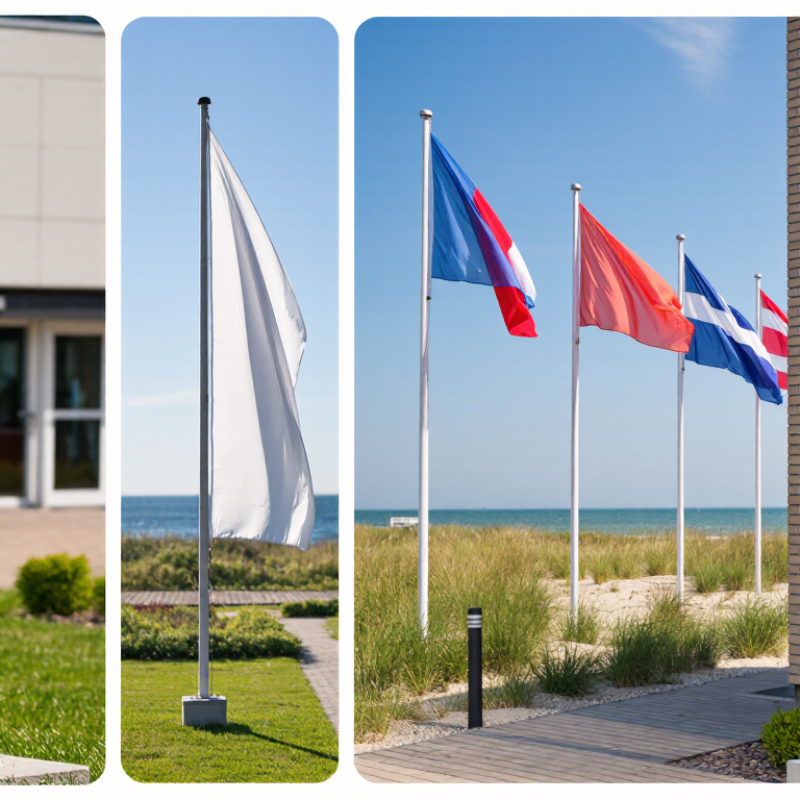
Flagpole Types Explained: Ground-Set, Hinged-Base, and Telescoping Designs
Choosing the best flagpole starts with the site, not appearance. A ground-set pole is anchored in a buried sleeve or footing and suits a fixed location, such as a front lawn. It can feel steady and clean-lined. But installation takes planning: check soil conditions, nearby utilities, and space for the flag to move freely. A permanent pole is less convenient if you later change the layout.
A hinged-base pole tilts down for flag changes and routine checks. That can make maintenance easier, especially where reaching the top would otherwise require a ladder. The hinge and fasteners need periodic inspection, and the pole needs clear room to lower safely. Small detail, big difference. I would not place one where a fence, vehicle, or walkway blocks its path.
Telescoping poles use nested sections that extend and lock at selected heights. They are handy for temporary displays, travel, or people who want easier storage. The trade-off is more joints to keep clean and properly locked; grit or a loose collar can spoil the setup. They may also move more in gusts, depending on their construction and flag size. Check the pole’s wind guidance before choosing a large flag. The right choice is the one that fits your space and maintenance habits, though it is easy to underestimate how much room a flag needs on a windy day.
What Is the Best Type of Flag Pole? — Flagpole Types Explained: Ground-Set, Hinged-Base, and Telescoping Designs
| Feature | Ground-Set Flagpole | Hinged-Base Flagpole | Telescoping Flagpole |
|---|---|---|---|
| How it is installed | The lower section is set in a ground sleeve or footing, commonly secured in a concrete foundation. Installation is intended to be permanent. | A base plate and hinge assembly are anchored to a prepared foundation. The pole can be lowered around the hinge for access. | The pole’s nested sections are assembled and extended above ground. Many models use a ground stake or surface-mounted base, depending on the design. |
| How the flag is raised | May use an external halyard with a rope and cleat, or an internal halyard operated through a locking access panel. | Flag-raising hardware varies by model; the hinged base is a lowering feature, not a flag-raising system by itself. | Typically uses sections that extend and lock into position. Many residential models do not use a rope-and-cleat halyard. |
| Best suited for | Permanent installations at homes, schools, public spaces, and commercial properties where a fixed pole is desired. | Locations where lowering the pole for maintenance, seasonal changes, or nearby work is useful. | Residential use, temporary displays, and situations where portability or compact storage is important. |
| Main advantages | Stable, permanent appearance; broad choice of heights, materials, and halyard arrangements. | Can be lowered without removing the pole from its foundation, making access to the upper pole easier. | Usually quick to set up and take down; sections can make transport and storage easier. |
| Main trade-offs | Requires careful site preparation and a suitable foundation. Lowering the pole is generally not part of a standard fixed-base setup. | Needs a properly installed hinge, base, and foundation, plus enough clear space to lower the pole safely. | Section locks and joints need to be checked and cared for. Maximum height, flag size, and wind suitability depend on the specific model. |
| Installation effort | Usually the most involved: foundation work, alignment, and appropriate curing time may be required. | Foundation and anchor installation are important; the hinge assembly must be aligned and secured correctly. | Often simpler than a permanent installation, but the base must still be stable and used according to the maker’s instructions. |
| Maintenance considerations | Inspect the halyard, cleat or access panel, pole finish, and foundation periodically. | Inspect the hinge, pins, anchors, and locking hardware regularly; lower the pole only in safe conditions. | Keep sections clean and inspect locks, joints, and the base. Follow the product instructions for extending and securing sections. |
| Wind and flag-size guidance | Choose a pole and flag combination rated for the site conditions. Wind performance depends on the pole, foundation, flag, and exposure. | Use only within the specified ratings for the complete pole and base assembly; the hinge does not increase wind capacity. | Check the model’s stated wind and flag-size limits. Do not assume a telescoping pole is suitable for high-wind exposure. |
| Overall fit | A strong choice for a long-term, fixed installation. | A practical choice when a permanent installation also needs a convenient way to lower the pole. | A practical choice when portability and easy setup matter more than a permanent, full-scale installation. |
Selection tip: The best design depends on the installation site, desired height, maintenance access, and local wind exposure. Verify the pole’s specifications, foundation requirements, and recommended flag size before purchase or installation.
Related Posts
-

How to Choose the Right Flag Pole
-

2026 Top Flag Pole How to Choose the Best One?
-

Choosing the Right Manufacturer for Best Flag Poles A Comprehensive Comparison Guide for Global Buyers
-

Top Flag Post Trends for 2026 What Should Global Buyers Know
-

Top 10 Flag Pole Types for Global Buyers to Consider?
-

2026 Best Flag Pole Options for Global Buyers?