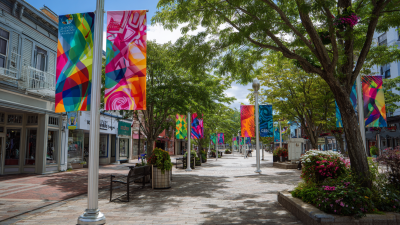
Top 10 Teardrop Flag Suppliers for Global Buyers?
Choosing a reliable Teardrop Flag supplier requires more than comparing online prices. Global buyers need consistent quality, clear communication, and dependable delivery. A low quotation may hide weak stitching, thin fabric, or unclear shipping terms.
This guide introduces ten suppliers serving different purchasing needs and regions. It considers printing quality, fabric weight, pole strength, base options, customization, minimum order quantities, and production lead times. These details matter when flags are displayed outdoors, transported between events, or used repeatedly at trade shows. A practical review should also examine sample policies, artwork approval, packaging, replacement support, and available business documentation. Small details often reveal a supplier’s working standards.
The selection is based on publicly available information, supplier experience, product range, and buyer-focused considerations. However, supplier conditions can change. Prices, certifications, factory capabilities, and delivery schedules should be verified directly before placing an order. No ranking can suit every buyer. A retailer may value private labeling, while an event company may need rapid production and durable bases. That difference deserves attention.
Real-world performance is not always visible in product photos. A bright printed flag may still fade after repeated sun exposure. A strong-looking pole may fail when paired with an unsuitable ground base. Buyers should request recent samples and confirm specifications in writing. These checks require extra time. They can prevent expensive misunderstandings later. The following supplier overview aims to support careful comparisons, not replace professional due diligence.

Understanding Teardrop Flags and Their Global Applications
Top 10 Teardrop Flag Suppliers for Global Buyers?
Understanding Teardrop Flags and Their Global Applications
Teardrop flags are portable fabric displays shaped like a falling water drop. Their curved edge keeps the message visible when wind moves the fabric. Common applications include trade shows, retail entrances, sports venues, festivals, and roadside promotions. A 2.4-meter flag can attract attention without blocking customer movement. Outdoor Advertising Market data from Grand View Research indicates that global outdoor advertising revenue is expanding steadily, supported by rising demand for flexible, location-based displays.
Material selection affects both appearance and service life. Polyester fabric, reinforced stitching, and fiberglass poles are widely used for repeated installation. Ground conditions also matter. A cross base may suit indoor floors, while a water-fillable base offers better stability outdoors. The wrong base can make a good flag unsafe. Test it outdoors.
Global buyers should request colorfastness information, fabric weight, washing instructions, and packaging dimensions. The ISO 4892-3 standard can guide ultraviolet exposure testing, although suppliers may not test finished flags under identical conditions. This creates a practical comparison problem. A printed sample may look excellent but fade after weeks in strong sunlight. Supplier evaluation should include wind testing, replacement-part availability, production lead time, and documented quality checks. Grand View Research also identifies customization and reusable advertising systems as important market drivers. Still, reusability depends on careful storage. Folded fabric, trapped moisture, and dirty poles can shorten the product’s useful life.
Key Criteria for Evaluating Teardrop Flag Suppliers
When evaluating teardrop flag suppliers, begin with product evidence, not attractive catalog images. Request a physical sample before placing a large order. Check the fabric weight, stitching, print sharpness, and pole connection by hand. A reliable supplier should provide clear material specifications and explain how colors may change outdoors. Ask for production photos, inspection records, and realistic delivery times.
Durability deserves careful attention. Confirm whether the fabric uses outdoor-grade polyester and whether the print withstands sunlight and repeated washing. Ask how the base performs on grass, pavement, and uneven ground. Suppliers with practical experience can recommend suitable bases for different locations. They should also explain wind limitations without making exaggerated promises. I once treated a low quotation as the best option, but weak stitching created replacement costs later. Price alone can mislead.
Communication is another useful test. Send a simple artwork file and observe the response. Does the supplier check dimensions, bleed areas, and color expectations? Ask about proof approval, sample revisions, packaging, and replacement procedures. Written answers are more dependable than vague assurances. A strong supplier should identify possible production risks before payment, including tight deadlines or unusual flag shapes. Still, no supplier is perfect. Small color differences can occur, and buyers should record acceptable tolerances before production begins. Their past export experience, transparent documentation, and willingness to discuss problems often reveal more than polished sales language.
Profiles of the Top 10 Teardrop Flag Suppliers
The top ten teardrop flag supplier profiles reveal different strengths for global buyers. A large display manufacturer offers stable monthly capacity and standardized dye-sublimation printing. A regional fabric specialist provides stronger color control for outdoor campaigns. A small custom workshop handles unusual shapes, though production times may vary. Another supplier focuses on recycled polyester and documents material content clearly. A wholesale exporter usually delivers competitive pricing for mixed container orders. An event-display expert supplies poles, bases, carry bags, and replacement parts together. A digital printing house supports short runs with detailed artwork checks. A factory near major ports may reduce transit time and simplify shipment planning. A premium manufacturer tests fabric seams, pole flexibility, and base stability. A fast-response trading company helps buyers compare specifications, but factory visibility requires closer checking.
Experienced buyers should request physical samples before approving large quantities. Inspect stitching around the sleeve and the flag’s lower curve. Ask for fabric weight, print method, wind guidance, and washing instructions.
A dependable supplier explains lead times in writing and confirms packaging dimensions. Clear carton labels also reduce warehouse mistakes. Certifications can support trust, but documents should match the actual production site. Communication quality matters when artwork changes late.
No supplier is perfect. Some strong factories explain technical details poorly. Some polished sales teams cannot answer production questions. Buyers should record sample results, delivery records, and complaint responses. The best match depends on order volume, climate, branding needs, and replacement planning. A low price can become expensive when poles bend or colors fade. Small details matter outdoors.
Comparing Product Quality, Customization, Pricing, and Delivery
Top 10 Teardrop Flag Suppliers for Global Buyers?
Comparing Product Quality, Customization, Pricing, and Delivery
A serious comparison begins with fabric, stitching, and hardware, not catalog photos. Polyester between 110 and 160 GSM usually balances visibility and portability. Ask for a physical sample before approving large quantities. Inspect the hem, pole sleeve, base connector, and print edges closely. Details matter. A durable teardrop flag should resist fading, fraying, and light outdoor moisture. However, no fabric performs perfectly in every climate. Windy coastal areas may require heavier bases and reinforced seams.
Customization often includes artwork, dimensions, double-sided printing, pole colors, and base options. Reliable suppliers confirm color references and provide a digital proof before production. Some can support unusual shapes, but custom patterns may increase setup time and material waste. Buyers should check whether the printed reverse side appears mirrored or visually muted. This small detail can affect roadside readability. Ask about replacement poles and compatible bases, too.
Pricing should be compared by landed cost, not unit price alone. Include artwork charges, sample fees, packaging, freight, taxes, and spare parts. A low quotation may exclude essential hardware. Delivery promises also need careful review. Request production time, dispatch time, tracking procedures, and packaging dimensions in writing. For repeated orders, a supplier with stable quality may be more valuable than the cheapest option. Still, quality claims require evidence. Independent inspection or batch photographs can reveal inconsistent stitching, incorrect colors, or missing components before shipment. Delivery slips. Plan a buffer.
Top 10 Teardrop Flag Suppliers for Global Buyers: Comparing Product Quality, Customization, Pricing, and Delivery
| Rank | Anonymous Supplier Profile | Typical Flag Sizes | Fabric & Print Quality | Customization Options | Indicative Unit Price* | Standard MOQ | Production Lead Time | Export Packaging | Best Fit |
|---|---|---|---|---|---|---|---|---|---|
| 1 | Supplier Profile 01 Premium export manufacturer |
2.3 m, 2.8 m, 3.5 m, 4.0 m | 110–120 gsm knitted polyester; double-sided mirror print available | Custom shape, sleeve, pole color, base, carry bag, artwork proof | US$18–42 per complete set | 50 sets | 10–18 working days | Individual oxford bags; reinforced cartons | Retail campaigns, exhibitions, repeated corporate orders |
| 2 | Supplier Profile 02 High-volume contract supplier |
2.5 m, 3.0 m, 3.5 m | 100–115 gsm polyester; UV-resistant dye-sublimation ink | Standard templates, full-color artwork, multiple bases and pole kits | US$14–32 per complete set | 100 sets | 12–20 working days | Bulk cartons with moisture-resistant inner packing | Distributors, franchised locations, large event programs |
| 3 | Supplier Profile 03 Custom branding specialist |
2.0 m, 2.8 m, 3.4 m, 4.5 m | 115 gsm polyester; strong color saturation and stitched edges | Unique silhouettes, custom hems, sewn labels, branded storage bags | US$22–55 per complete set | 25 sets | 15–25 working days | Retail-ready bags and labeled cartons | Agencies, sports events, premium promotional projects |
| 4 | Supplier Profile 04 Fast-turnaround online supplier |
2.4 m, 3.0 m, 3.6 m | 90–110 gsm polyester; single-sided print is standard | Online artwork upload, standard pole and base selections | US$16–35 per complete set | 10 sets | 7–14 working days | Compact carry bag and standard shipping carton | Small businesses, short promotions, test orders |
| 5 | Supplier Profile 05 Outdoor durability supplier |
2.8 m, 3.5 m, 4.0 m, 5.0 m | 115–125 gsm polyester; reinforced top sleeve and hem | Heavy-duty bases, ground stakes, water bags, reinforced stitching | US$24–60 per complete set | 30 sets | 15–22 working days | Reinforced cartons; separate base protection | Outdoor retail, automotive events, long-term displays |
| 6 | Supplier Profile 06 Budget-focused factory supplier |
2.0 m, 2.5 m, 3.0 m | 80–100 gsm polyester; economical single-sided print | Basic artwork setup, standard bases and aluminum poles | US$10–25 per complete set | 100 sets | 12–18 working days | Bulk polybags inside export cartons | Price-sensitive campaigns and high-volume orders |
| 7 | Supplier Profile 07 Regional fulfillment supplier |
2.5 m, 3.0 m, 3.5 m | 100–115 gsm polyester; standard fade-resistant printing | Limited custom shapes, local-language packaging, replacement skins | US$20–40 per complete set | 20 sets | 8–16 working days | Individual bags with barcode-ready cartons | Importers needing dependable regional replenishment |
| 8 | Supplier Profile 08 Eco-material option supplier |
2.3 m, 2.8 m, 3.5 m | Recycled polyester options; 100–120 gsm fabric range | Recycled fabric, recyclable packaging, custom care labels | US$22–48 per complete set | 50 sets | 16–28 working days | Recycled or recyclable packing where available | Sustainability-led procurement and public events |
| 9 | Supplier Profile 09 Design and sampling supplier |
1.8 m, 2.4 m, 3.0 m, 3.6 m | 110 gsm polyester; pre-production sample approval available | Design assistance, sample revisions, custom color matching | US$25–58 per complete set | 10 sets | 18–30 working days | Protective bags and sample-labeled cartons | Creative agencies and first-time custom buyers |
| 10 | Supplier Profile 10 Replacement and accessories supplier |
2.0 m, 2.5 m, 3.0 m | 90–110 gsm polyester; replacement skins and standard hardware | Replacement flags, bases, poles, ground stakes, carry bags | US$12–30 per complete set | 25 sets | 10–20 working days | Small-part protection and mixed-item cartons | Existing display fleets and replacement-part programs |
How Global Buyers Can Select the Right Supplier
Selecting a teardrop flag supplier requires more than comparing catalog prices. Global buyers should examine fabric weight, dye quality, stitching, pole flexibility, and base stability. A low quote may hide weak seams or unclear replacement policies. I have seen attractive samples fade after one outdoor season. The photo looked better than the product.
Independent data can guide the decision. The ASI 2023 Ad Impressions Study found that promotional products generated 5,053 impressions per item on average in the United States. That figure shows why visibility matters. Buyers should request fabric test results, colorfastness data, and photographs from real installations. Ask whether the supplier measures print accuracy before shipment. Small errors become obvious across a row of flags. No checklist is perfect.
Supplier reliability also depends on production control. ISO 9001 certification can indicate documented quality processes, but certification alone proves little. Check audit scope, complaint handling, and corrective-action records. Request a pre-production sample with the exact artwork, pole height, hardware, and carry case. Confirm carton dimensions and shipping weight before ordering. These details affect freight costs and warehouse planning. The Grand View Research outdoor advertising report identifies continued market expansion, yet growth does not guarantee consistent manufacturing. Buyers should compare at least three quotations and test one complete unit first. A supplier who answers difficult questions clearly is often safer than one offering the lowest price.
The chart presents a practical buyer scorecard for comparing teardrop flag suppliers. Product quality and customization receive the highest weights, while MOQ, lead time, export capability, landed cost, communication, and after-sales support help buyers assess overall supply reliability. These are evaluation weights rather than performance claims about any specific company.
Related Posts
-
Why Teardrop Flags are the Ultimate Solution for Outdoor Advertising Success
-
Quality Teardrop Flags Bridging China to the Global Market
-

What is a Hand Flag and How to Choose the Best One for Your Needs
-

Exploring the Growth of Beach Flag Pole Market at the 2025 China Import and Export Fair
-
Top 10 Feather Flag Poles You Should Consider for Your Brand?
-
How to Choose the Best Beach Flag Pole for Your Needs?