7 Tips for Choosing a Wall Mounted Flagpole?
A Wall Mounted Flagpole can make a plain exterior feel more welcoming, visible, and purposeful. Yet a good choice involves more than matching the flag to your building. Wall material, mounting height, wind exposure, and pole length all affect daily performance. A flag that looks balanced in a showroom may appear oversized beside a narrow porch. Small details matter.
This guide shares seven practical tips based on installation experience, manufacturer specifications, and common maintenance recommendations. You will learn how to compare bracket strength, weather-resistant finishes, rope systems, and suitable flag sizes. Stainless steel may suit coastal conditions, while powder-coated aluminum can offer a lighter, practical option. Always check the product’s load guidance. Marketing language can sound impressive, but measurable specifications are more useful.
I once underestimated how strongly a corner wall catches wind. The flag looked attractive, but the bracket needed more support than expected. That mistake changed how I assess masonry, screws, drainage, and clearance around windows. It also showed why reliable advice should include limitations, not only benefits. No single Wall Mounted Flagpole suits every property. A brick wall, timber siding, and rendered concrete each require different fixing methods. Local building requirements and the manufacturer’s installation instructions should guide the final decision. The following tips will help you choose with clearer expectations, fewer avoidable repairs, and a more secure display. Take your time.
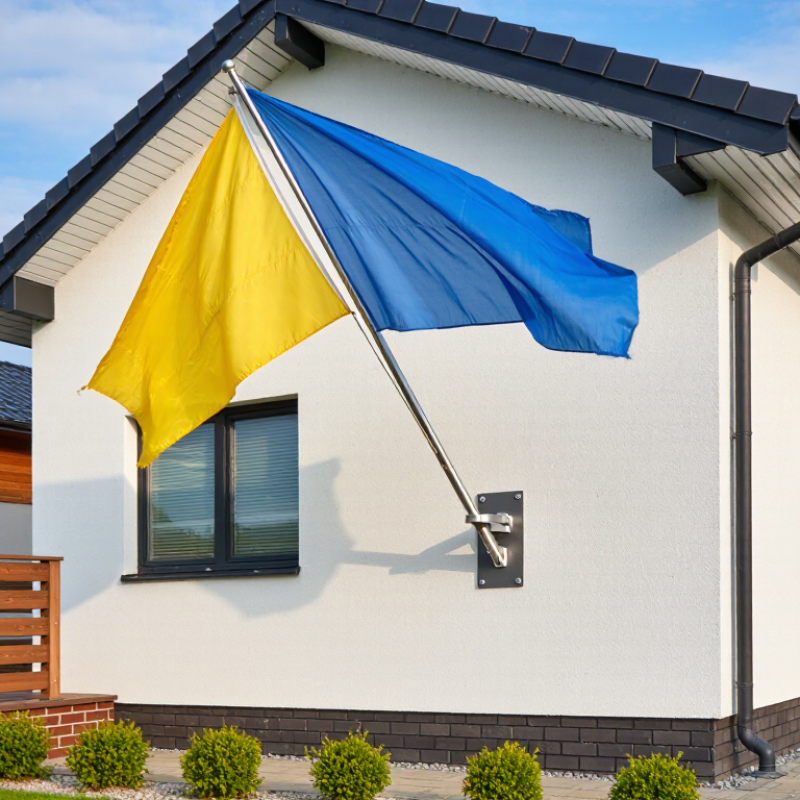
Define Your Flagpole’s Purpose, Location, and Display Requirements
Choosing a wall mounted flagpole starts with its purpose, not its appearance. Is it for daily identification, ceremonial display, or seasonal decoration? Tip 1: Define the message. A civic flag may need stronger visibility than a small office flag. Tip 2: Measure the viewing distance. The Flag Institute recommends that flag design and size match the available visual field. A flag that looks bold nearby may disappear across a parking area. Tip 3: Check display rules. The United States Flag Code provides guidance on respectful positioning, lighting, and handling.
Location controls safety and service life. Tip 4: Inspect the mounting surface. Brick, concrete, and structural wood need different anchors. Do not trust decorative siding alone. Tip 5: Study wind exposure. ASCE 7-22 requires designers to consider site wind speed, exposure, height, and pressure. NOAA’s National Hurricane Center defines hurricane-force winds as 74 mph or higher. Coastal walls deserve extra caution. Tip 6: Keep the pole clear of doors, trees, signs, and overhead utilities. Small clashes become expensive repairs. I have seen attractive installations fail because drainage was ignored.
Display requirements affect hardware choices. Tip 7: Decide whether the flag should fly continuously, rotate freely, or come down quickly during storms. Choose corrosion-resistant fittings near salt air. Allow room for fabric movement. It sounds minor. It is not. Review the plan with a qualified installer, then reconsider it after measuring the wall, because real surfaces are rarely as level as drawings suggest.
Choose the Right Pole Length, Material, and Finish
7 Tips for Choosing a Wall Mounted Flagpole
Choose the Right Pole Length, Material, and Finish
Measure the mounting height before choosing a pole. A pole extending 18 to 30 inches beyond the bracket usually displays a residential flag clearly. Match the pole length to the flag size. Oversized flags can strain brackets and masonry. Keep the flag from touching gutters, windows, or nearby branches. Small clearances matter.
Choose aluminum for low weight and strong corrosion resistance. Steel offers greater stiffness but needs better protection against moisture. The NACE IMPACT study estimates global corrosion costs at $2.5 trillion annually, equal to about 3.4% of global GDP. That figure makes material protection difficult to ignore. Check the wall type before selecting screws or anchors. Brick, concrete, and siding need different hardware.
Select a powder-coated or anodized finish for outdoor exposure. AAMA 2604-22 evaluates coating durability through color retention, chalk resistance, and humidity performance. Dark finishes can become very hot in direct sun. That may accelerate fading or make handling uncomfortable. Review the local wind requirement using ASCE 7-22, which bases design maps on three-second gust speeds. Coastal locations deserve extra attention. Inspect the bracket, fasteners, and pole annually. I would not trust a beautiful finish with loose hardware. My earlier assumption was simple: thicker always meant better. It does not, if the wall connection is weak.
Evaluate Wall Strength, Mounting Hardware, and Installation Method
A wall-mounted flagpole needs more than a suitable pole and a clear wall. Start by checking the wall’s strength, age, and construction. Brick, concrete, timber, and cladding require different fixing methods. A hollow or cracked surface may look stable but can fail under wind pressure. Tap the area and inspect for loose mortar, dampness, or hidden damage.
Choose mounting hardware that matches both the wall and the pole bracket. Heavy-duty screws alone may not hold in weak masonry. Use appropriate anchors, washers, and corrosion-resistant bolts. The bracket should sit flat, with no rocking when you apply firm hand pressure. Leave enough clearance for the flag to move without striking windows, gutters, or nearby branches. Small details matter.
Installation method affects long-term safety. Mark the holes with a level, then drill slowly to avoid enlarging them. For masonry, clean the dust from each hole before inserting anchors. On timber, fasten into structural framing rather than thin boards. Seal exposed openings where moisture could enter. I once installed a bracket slightly off-level, and the flag pulled harder than expected during gusts. It remained secure, but the uneven load was a useful warning. Check every fastener after the first windy day, then inspect the bracket and wall seasonally. If the surface is uncertain, ask a qualified installer to assess it before drilling.
Compare Flag Size, Shape, Halyard Systems, and Wind Performance
7 Tips for Choosing a Wall Mounted Flagpole
A wall mounted flagpole should match the flag, wall, and local weather. Start by measuring the visible mounting area. A flag around 3 by 5 feet often suits residential walls, while smaller flags reduce strain on narrow brackets. Choose a rectangular flag for clear display, or a swallowtail shape when lighter movement matters. Shape affects drag more than many buyers expect. Keep it practical.
Check the halyard system before focusing on appearance. An external halyard is easy to inspect and replace, but it may tap against the pole in strong wind. An internal system looks cleaner and reduces noise, although repairs can be less convenient. Select corrosion-resistant fittings, secure knots, and a locking point that prevents accidental lowering. Small details matter. I once underestimated the sound of loose rope near a bedroom window.
Wind performance depends on more than the flag material. A breathable fabric can reduce pressure during gusts, but it may wear faster at the fly end. Reinforced corners and double-stitched edges are useful field-tested features. Mount the bracket into solid masonry or structural framing, not only thin cladding. Review the pole’s rated wind conditions, then allow a safety margin. Inspect the flag, rope, screws, and bracket after severe weather. My own judgment has improved through these checks, though no setup stays maintenance-free. Rotate the flag occasionally to balance fading and wear.
Check Maintenance Needs, Safety Features, Durability, and Cost
7 Tips for Choosing a Wall Mounted Flagpole?
Tip 1: Check the maintenance needs before purchasing. Choose corrosion-resistant materials and inspect the mounting hardware every few months. Dust, rain, and salt air can weaken exposed fittings. Tip 2: Study the safety features carefully. A secure bracket, smooth pulley, and dependable rope reduce tangling and falling risks. Keep the flag away from windows, wires, and busy walkways. Tip 3: Confirm the installation surface. Brick, concrete, and wood require different fasteners. A professional installer can identify hidden weakness behind the wall.
Tip 4: Consider durability in real weather. Strong wind, freezing temperatures, and direct sunlight test every flagpole. Look for sturdy tubing, reinforced joints, and UV-resistant rope. Lightweight designs may appear convenient, but they can vibrate loudly during storms. I once underestimated that problem. It became annoying quickly. Tip 5: Match the pole size to the flag. An oversized flag creates extra drag and stress. Follow the maker’s recommended proportions, even if the larger flag looks more impressive.
Tip 6: Compare the complete cost, not only the purchase price. Include brackets, fasteners, installation, replacement rope, and future maintenance. Cheap hardware can become expensive after one repair. Tip 7: Check adjustment and cleaning access. A removable flag or accessible pulley makes routine care easier. Ask how parts are replaced before buying. Specifications can look convincing, but practical access matters more. A brief inspection in person may reveal details that photographs miss.
7 Tips for Choosing a Wall Mounted Flagpole
Compare maintenance needs, safety features, durability, installation requirements, and total ownership cost before selecting a wall mounted flagpole.
| Tip | What to Check | Practical Recommendation | Typical Reference Data | Why It Matters |
|---|---|---|---|---|
| 1. Review Maintenance Needs | Inspect the finish, fasteners, rope or halyard, pulley, swivel, and flag attachment points. | Choose corrosion-resistant hardware and a design that allows ground-level flag replacement whenever possible. | Inspect every 3–6 months; lubricate moving parts about once a year; replace visibly frayed rope promptly. | Regular checks reduce wear, noise, dropped flags, and unexpected repair costs. |
| 2. Prioritize Safety Features | Look for secure brackets, locking hardware, rounded edges, tamper-resistant fasteners, and adequate clearance from doors and walkways. | Use at least two properly spaced mounting points and follow the installation instructions for the wall structure. | Keep the flag clear of power lines, windows, traffic paths, and opening doors; maintain a visible clearance zone around the assembly. | Safe spacing and secure mounting help prevent injury, property damage, and accidental detachment. |
| 3. Evaluate Durability | Compare pole material, wall thickness, surface coating, bracket construction, and resistance to ultraviolet exposure and moisture. | For outdoor use, favor aluminum or galvanized steel with a weather-resistant coating and stainless or galvanized fasteners. | A 1–1.5 inch (25–38 mm) diameter pole is common for residential wall-mounted applications; actual strength depends on design and mounting. | Material quality determines resistance to rust, bending, fading, and repeated wind loading. |
| 4. Check Wind Exposure | Consider local wind conditions, flag size, building height, surrounding structures, and whether the pole can be lowered quickly. | Select a smaller or vented flag in exposed locations and remove or lower it during severe weather when recommended. | A typical 3 × 5 ft (0.9 × 1.5 m) flag has about 15 sq ft (1.4 sq m) of surface area and can create substantial load in strong wind. | Wind force increases rapidly with wind speed, so flag area and exposure directly affect bracket stress. |
| 5. Match the Wall Structure | Identify whether the bracket will attach to masonry, concrete, wood framing, or siding over sheathing. | Use fasteners designed for the substrate; do not rely only on thin siding, drywall, or decorative cladding. | Masonry and concrete generally require suitable anchors; wood installations should be secured into structural framing whenever possible. | The wall connection is often the critical load-bearing point, especially during gusts. |
| 6. Confirm Size and Installation Fit | Measure available wall space, projection from the wall, pole length, flag dimensions, and nearby obstructions. | Allow enough clearance for the flag to fly freely without striking the building, roof, trees, or utility equipment. | Common residential poles are approximately 4–6 ft (1.2–1.8 m) long, but the appropriate size depends on the mounting height and flag ratio. | Correct proportions improve appearance, reduce abrasion, and make routine handling easier. |
| 7. Compare Total Cost | Include the pole, bracket, flag, fasteners, tools, installation labor, replacement parts, and future maintenance. | Compare total installed cost rather than choosing solely by the lowest initial purchase price. | Indicative consumer pricing: basic hardware sets about $25–$75; more robust systems about $75–$200; professional installation may add roughly $50–$200, depending on access and wall type. | A durable, serviceable system can cost less over time by reducing replacement and repair frequency. |
Note: Cost ranges and dimensions are general planning figures in U.S. dollars. Actual requirements vary according to local building conditions, wind exposure, materials, labor rates, and applicable safety regulations.
Related Posts
-
Solutions for Boosting Visibility with Wall Mounted Flagpoles in International Markets
-
What is a Wall Mounted Flagpole? Benefits, Installation, and Tips Explained
-
China Best Wall Mounted Flagpole Supplier Global Buyers
-

Top 10 Table Flag Stand Ideas for Every Occasion?
-

What is a Fiberglass Flagpole and Why Choose It?
-

How to Choose the Perfect Table Flag Stand for Your Event
