
2026 Best Aluminium Flagpole Types for Global Buyers?
Global buyers face a practical choice: which Aluminium Flagpole type suits the site, climate, and installation plan? The answer depends on more than height. A telescopic pole can simplify transport and temporary deployment, while sectional designs may suit locations where components must be carried separately. Swaged and tapered poles offer other options for permanent installations. Each design brings trade-offs in setup, appearance, maintenance, and cost.
Material sustainability also deserves careful attention. The International Aluminium Institute reports that about 75% of all aluminium ever produced remains in use today. This industry figure supports aluminium’s circularity, but it does not prove that every pole contains recycled metal or will perform equally well. Buyers should request product-specific material details rather than rely on broad environmental claims. That distinction matters.
This guide compares common pole types through practical purchasing questions: How will the pole be transported? Is the halyard internal or external? What foundation and wind-load information does the supplier provide? For exposed sites, documented engineering data and clear installation instructions matter more than a polished product photo. Check the finish, fittings, warranty, and replacement-part availability, too. A low purchase price can conceal higher upkeep. We should admit one limit: no single type is best for every market or site. The right choice depends on verified specifications and local conditions, not a universal ranking.
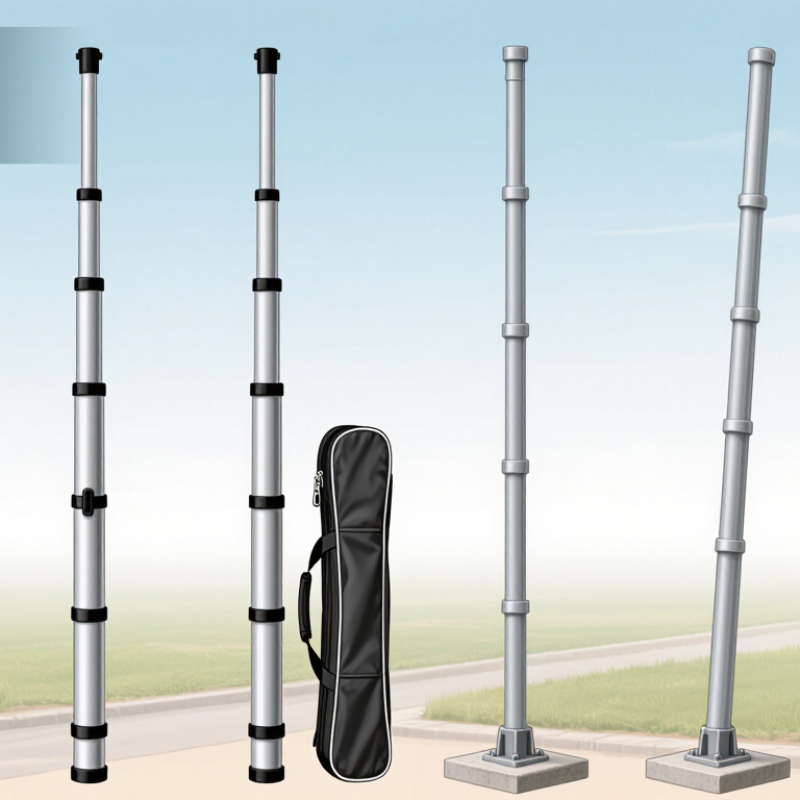
Aluminium Flagpole Types: Ground-Set, Hinged, Sectional, and Telescopic
2026 Best Aluminium Flagpole Types for Global Buyers?
Ground-set aluminium flagpoles suit permanent outdoor displays. A buried sleeve or concrete footing supports the pole, so careful site preparation matters. They work well beside entrances, in school grounds, and across open lawns. Measure the installation area first. A tall pole needs suitable clearance and a stable foundation.
Hinged-base models tilt down for flag changes or routine checks. They can be practical near buildings, though the base needs room to move safely. Sectional poles connect in separate pieces, making transport and storage easier. Check each joint for a secure fit. Telescopic poles extend and lock at different heights, which helps when displays need flexibility. Their locking collars need regular inspection, especially after repeated use. No type is perfect; the best choice depends on site conditions, flag size, and how often the pole will be handled.
Tips: Ask for the pole’s recommended flag dimensions and wind guidance. Inspect fasteners and finishes before installation. Keep it simple. A quick check can prevent a loose connection, but it does not replace proper installation.
2026 Best Aluminium Flagpole Types for Global Buyers? – Aluminium Flagpole Types: Ground-Set, Hinged, Sectional, and Telescopic
| Type | Construction and Installation | Typical Applications | Main Advantages | Points to Consider | Buyer Checklist |
|---|---|---|---|---|---|
| Ground-set | A fixed pole is installed in a ground sleeve or foundation set into the ground. The pole is generally removed by lifting it from the sleeve, if the system is designed for removal. | Schools, public buildings, commercial sites, memorial grounds, and other locations where a permanent display is wanted. | Simple appearance, few moving parts, and a stable installation when the foundation is properly designed for the pole and site conditions. | Requires excavation and a suitable foundation. Soil, drainage, frost depth, wind exposure, and local building requirements can affect installation. | Confirm foundation and sleeve requirements, pole height, wind rating, access for installation, and whether the pole can be removed for maintenance. |
| Hinged | A hinge or pivot assembly near the base allows the pole to be lowered, usually toward the ground, for flag changes or maintenance. The base still needs an appropriately designed foundation. | Sites where access equipment is difficult to use, or where regular servicing is expected, such as landscaped grounds and roadside locations. | Can make routine work at the top of the pole easier and may reduce the need for a ladder or lifting equipment during servicing. | The hinge, fasteners, and base require inspection. Adequate clear space is needed to lower the pole safely. | Check hinge material and locking method, lowering clearance, operating procedure, foundation design, and access to replacement hardware. |
| Sectional | The pole is supplied in multiple aluminium sections that connect during assembly. Connection methods vary by design, and the assembled pole is typically installed in a ground sleeve or base system. | Projects where shipping length, transport access, or on-site handling makes a single long pole impractical. | Shorter components can be easier to transport and handle. Section count and lengths can be selected to suit packaging and site access. | Assembly is required, and joints must be correctly fitted. Joint design and assembly instructions should be checked for the intended pole height and exposure. | Ask for assembled height, section lengths, joint details, assembly tools, packaging dimensions, and installation guidance. |
| Telescopic | Nested aluminium tubes extend and lock at selected heights. Depending on the model, the pole may be portable, temporary, or intended for a specific mounting system. | Temporary displays, events, portable use, and situations where adjustable height or compact storage is useful. | Adjustable height and compact storage can make transport and setup convenient compared with a fixed, one-piece pole. | Locking collars or other mechanisms need correct operation and care. Wind suitability depends on the model, extension height, flag size, and mounting arrangement. | Verify extended and packed lengths, locking method, recommended flag dimensions, mounting compatibility, and the manufacturer’s wind-use guidance. |
Note: “Ground-set” describes a mounting approach, while hinged, sectional, and telescopic describe pole or operating designs. Configurations can overlap. Select a pole based on the site, flag dimensions, local wind conditions, installation requirements, and applicable regulations.
Related Posts
-
2026 Best Telescoping Flagpole Reviews and Buying Guide?
-
2026 Top Stainless Steel Flagpoles for Your Home and Business?
-
Best Flagpole Options for Your 2026 Outdoor Space?
-

Best Telescopic Flag Pole for Outdoor Use?
-

Why Choose Stainless Steel Flagpoles at the 139th Canton Fair?
-

China Top 10 Flag Post Suppliers for Global Buyers?