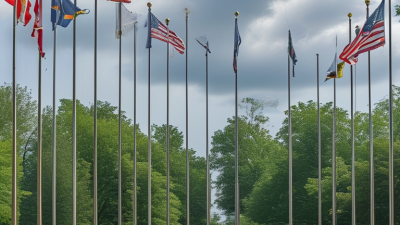
How to Choose a Feather Flag Pole in 2026
Choosing a Feather Flag Pole in 2026 is less about picking the tallest option and more about matching the pole to its job. A beach event, shop entrance, and indoor trade show place different demands on the same display. Start by checking the flag’s sleeve size and finished height; a snug, compatible fit helps the fabric move without bunching. Small details matter. Measure twice. Then consider the pole’s material, section connections, and packed length. Fiberglass is flexible, while aluminum often feels firmer, but construction quality varies between products. Look for clear specifications rather than relying on appearance alone.
The site matters just as much as the pole. A cross base may suit a hard floor, while a ground spike is designed for suitable soil; each still needs appropriate use and setup. Check the base compatibility before ordering, and think about wind exposure, foot traffic, and how often the display will be transported. No pole makes a flag risk-free in strong wind. Follow the maker’s setup guidance and take the display down when conditions exceed its limits. A carrying bag and replaceable sections can also make regular use easier. In practice, the cheapest kit may cost more time if parts do not fit or need frequent replacement. Still, a checklist cannot predict every venue. Compare dimensions, intended use, and support details, then choose the Feather Flag Pole that fits your actual setting—not just the product photo.
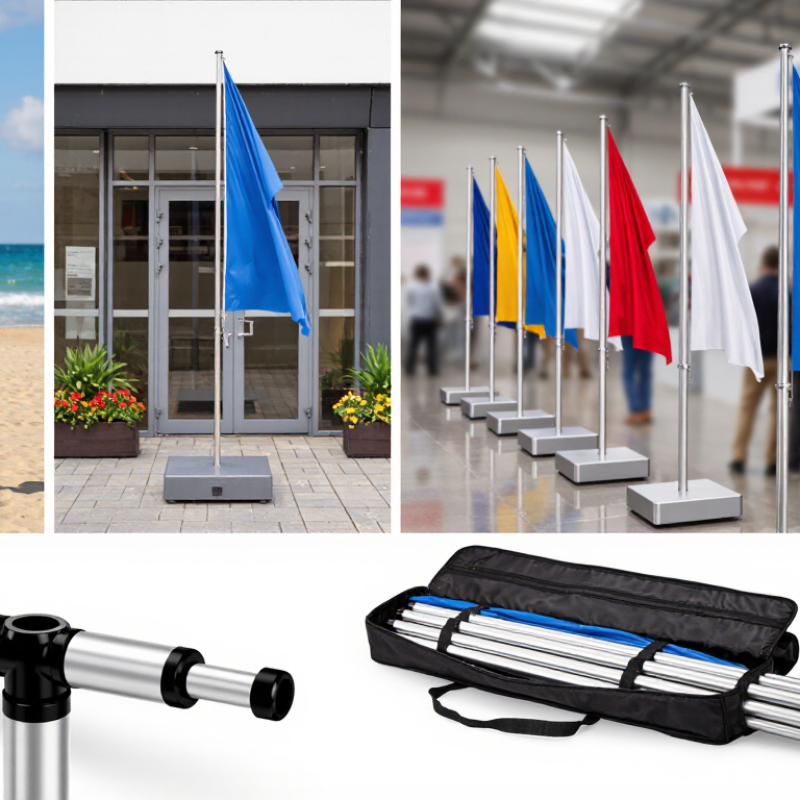
Understanding Feather Flag Pole Types and Components
Feather flag poles commonly use flexible fiberglass sections, aluminum sections, or a combination of both. Fiberglass bends with gusts and helps the flag recover its shape, but it can feel less rigid during assembly. Aluminum is stiffer and often suits repeated setup, though joints and finish deserve inspection. Some kits use a curved top arm; others have a straighter profile for different flag shapes. The pole, sleeve, top arm, and connector pieces must match the flag’s sewn pocket. Small mismatches matter. Fabric may bunch, twist, or pull unevenly.
Base choice is part of the pole system, not an afterthought. A ground stake fits soil, while a cross base works on hard surfaces when weighted properly. Water bags add ballast, but they do not make every setup safe in strong wind. Check pole height, section count, replacement availability, and the base opening before buying. Assemble the sections and check for loose joints and a flag that rotates freely. That hands-on check catches more than a product photo. Do not assume the tallest pole is best; a smaller setup may be easier to carry and maintain. Even careful matching leaves compromises. Wind, ground, and handling vary, so inspect the pole regularly and follow the maker’s guidance for use in changing conditions.
How to Choose a Feather Flag Pole in 2026: Types and Components
Material density offers a useful first comparison when choosing pole components. Lower-density materials can help keep a pole lightweight, while the finished pole’s weight and flexibility also depend on its design and construction.
Approximate material densities: carbon-fiber composite, 1.6 g/cm³; fiberglass-reinforced polymer, 1.9 g/cm³; aluminum, 2.70 g/cm³; and steel, 7.85 g/cm³. Actual values vary by alloy and composite formulation. Density is not the same as the weight of a finished pole. Check the pole’s assembled height, section connections, flag compatibility, and base requirements before choosing.
Matching Pole Height and Shape to Your Flag
A feather flag pole should match the flag’s height, width, and intended setting.
A tall, narrow flag usually needs a pole with enough reach to keep its curved edge visible above nearby people or displays. For a small sidewalk space, however, an oversized pole can feel awkward and catch more wind. Check the flag’s sleeve dimensions before buying; poles that look similar may use different section lengths or connections. Fit matters.
Shape matters, too. A feather-shaped flag needs a curved top section to hold its signature outline. A teardrop design uses a different bend, while a straight or rectangular flag may need a crossbar or another support style. Don’t judge by the printed fabric alone. Lay the flag flat and compare its sleeve path with the pole’s shape. I once assumed a longer pole would solve a sagging edge; it didn’t. The sleeve shape was the issue, and that detail is easy to miss.
Tips: Measure the assembled pole, not just its longest section. Check the flag’s finished height and width, then leave room for the base and overhead clearance. For outdoor use, consider how exposed the spot is to gusts. A very tall pole may sway more than expected, even when its flag looks properly fitted. If possible, test the setup in a sheltered area before placing it in a busy walkway.
Comparing Materials, Flexibility, and Durability
A feather flag pole must balance low weight with enough flexibility to handle gusts. Fiberglass sections bend and spring back, which can reduce stress during changing wind. They suit many short-term outdoor displays. But thin fiberglass may splinter after repeated flexing or rough storage. Check the pole’s wall thickness and inspect its surface for cracks.
Aluminum poles feel light and resist rust, though rigid sections may transfer more force to joints in strong gusts. Section connectors matter. Loose fittings can wobble, while tight, well-fitted joints help keep the flag aligned.
Not always obvious.
A pole can seem sturdy indoors yet sway noticeably beside a busy road. Consider the flag’s height, the expected wind, and how often the display will be assembled. For frequent setup, durable connectors and a carry case may matter as much as the pole material.
I would not assume the stiffest pole is the strongest choice; a little controlled flex can be useful. Inspect joints and pole sections regularly, especially after a windy day.
Selecting a Base for the Installation Surface
A feather flag pole is only as dependable as the base beneath it. Match the base to the installation surface, not just the pole height. For grass or firm soil, a ground stake can hold the pole directly; press it deep enough to reduce wobble. On concrete, paving stones, or indoor floors, use a compatible cross base or weighted plate. Check that its fitting matches the pole’s diameter before buying.
The surface matters, but so does exposure. A smooth patio may seem stable, yet gusts can shift a light base across the ground. Choose a broader or heavier option where people pass nearby, and follow the pole maker’s wind guidance. On uneven paving, check that the base sits flat; a small tilt can make the flag lean and strain its fittings. I’d still reassess after setup, because even a carefully chosen base can move.
Tips: Measure the available footprint before selecting a base. For soft ground, test the stake by gently rocking the pole. For hard surfaces, add only compatible weights, and inspect the setup after strong gusts. Don’t assume heavier always means secure.
Checking Compatibility, Portability, and Care Needs
A feather flag pole should match the flag’s sleeve, height, and base—not just its advertised size.
Measure the sleeve opening and check how the pole sections connect. A loose fit can twist in a breeze; a tight one can make setup frustrating. Fit matters first. OAAA’s 2023 revenue report recorded $9.1 billion in U.S. out-of-home advertising revenue. That scale makes stable, readable displays important, though the figure does not measure pole performance.
Portability depends on more than packed length. Check the bag dimensions, total weight, and whether the base suits your surface. A small ground spike may work on soft soil but not pavement; a water- or sand-fillable base is heavier to carry. A practical compromise. For care, wipe dirt from joints before packing, dry the fabric and pole fully, and inspect connectors for cracks. NOAA’s 1991–2020 U.S. Climate Normals provide local wind and precipitation averages; use your area’s conditions when planning placement. A stated wind rating is useful, but it cannot account for every gust or installation. I’d rather carry a slightly bulkier base than discover the hard way that a lightweight setup shifts.