How to Choose the Best Telescoping Flagpole for Your Needs?
Choosing the right Telescoping Flagpole can be a daunting task. With numerous options available, making the best choice is crucial. Industry expert, Mark Jensen, emphasizes, "The right flagpole enhances both aesthetics and durability." This quote resonates deeply as many overlook the significance of quality.
When selecting a Telescoping Flagpole, consider your specific needs. Factors like height, material, and design play essential roles. Many people get it wrong by focusing solely on price. A cheap flagpole may not stand the test of time. Imagine a beautiful flag fluttering high, only for the pole to bend or break in strong winds.
Taking time to understand your options can prevent future frustrations. Some customers have reported pole failures due to poor quality. Investing in a reliable Telescoping Flagpole is worth it. Prioritize research and seek advice from knowledgeable sources. Making informed choices leads to a more satisfying experience.

Factors to Consider When Choosing a Telescoping Flagpole
Choosing the right telescoping flagpole involves several key factors. The height of the flagpole is crucial. Different heights suit different locations and flags. Consider whether you want a tall display for visibility or a shorter one to fit in a confined space. Some flagpoles reach up to 20 feet, while others are more compact. Think about where it will stand and how visible it should be.
The material of the flagpole also matters. Aluminum is lightweight and resistant to rust. Fiberglass is durable but can be heavier. Look for materials that can withstand local weather conditions. A flagpole needs to endure wind, rain, and sun exposure. Look for strength ratings and user reviews to gauge performance. Ensure that the base is stable too. A flimsy base can lead to accidents or damage.
Lastly, consider how easy it is to install and operate. Some models feature a simple pulley system, while others may be more complex. Assess your own skills or willingness to seek help. If you’re unsure about installation, a user-friendly design might be best. These factors reveal the layers of complexity in flagpole selection, calling for careful thought rather than a hasty decision.
Material Options: Aluminum vs. Fiberglass for Durability
When choosing a telescoping flagpole, material is crucial. Aluminum and fiberglass are the common options. Aluminum is lightweight and resistant to rust. It also offers great strength. Many people prefer aluminum for its ease of installation. However, aluminum can dent and scratch easily. It may not withstand harsh weather as well as expected.
Fiberglass, on the other hand, is known for its durability. It resists corrosion and remains sturdy under extreme temperatures. Fiberglass poles don’t conduct electricity, which can be a safety advantage. Yet, they are heavier than aluminum, making them harder to install and transport. Some users find fiberglass poles less aesthetically pleasing compared to aluminum.
Both materials have pros and cons. For instance, while aluminum offers a sleek look, it may require more maintenance. Fiberglass could last longer, but it comes at the cost of weight. Reflecting on these differences is essential for making the right choice. Consider your local weather and installation preferences before deciding. Each material has a unique set of features that might fit your needs differently.
Height and Size Considerations for Different Applications
When choosing a telescoping flagpole, height and size are crucial. The setting often dictates what size works best. For residential use, a flagpole between 15 to 20 feet tall is typically ideal. This height allows visibility while blending with the home’s aesthetics. Consider the surrounding trees and buildings. A pole that is too short may lose its impact.
For commercial spaces, taller poles are often needed. A 25 to 30-foot flagpole can prominently display a flag. Businesses with wider grounds may even opt for taller options. Yet, height isn't everything. The width of the flag should complement the pole. Oversized flags may catch too much wind, risking damage. Balance is key.
Always think about installation too. A taller pole may require a more secure base. Reflect on weather conditions in the area. Strong winds can pose challenges for taller poles. It’s essential to ensure safety and durability. Adjust your choice based on these factors to ensure long-term satisfaction.
Installation Requirements and Ease of Use
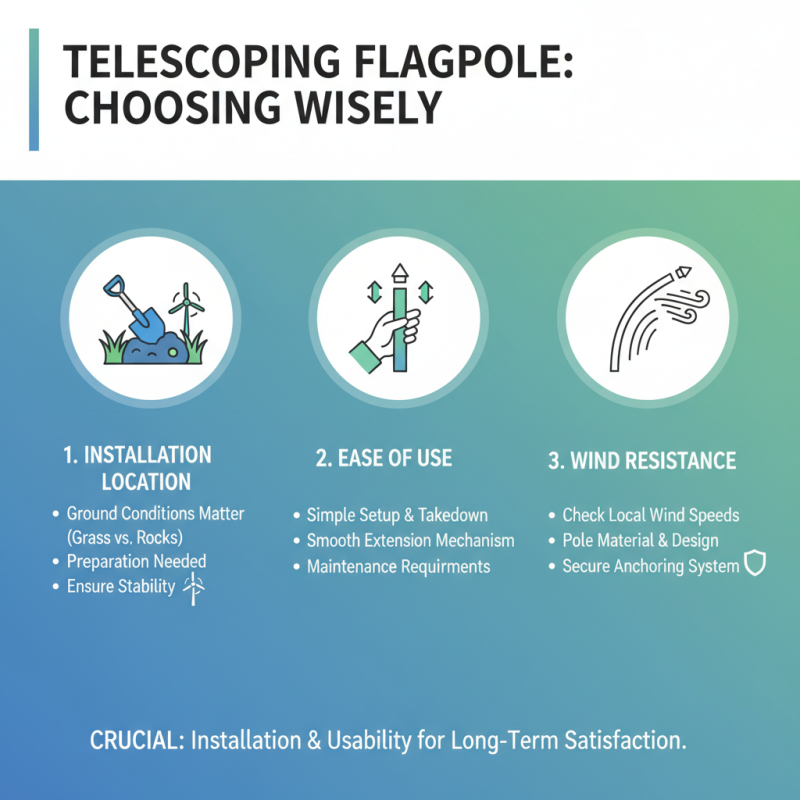
When choosing a telescoping flagpole, considering installation requirements and ease of use is crucial. Start by examining where you plan to set it up. The ground conditions can significantly impact the installation process. A grassy area may require less preparation compared to rocky or uneven surfaces. Sometimes, it's tough to ensure stability. Make sure the pole can withstand winds in your region.
Next, think about assembly and disassembly. Some poles come with an intricate design that seems daunting. Others are simpler, and that can be beneficial. Aim for a pole that you can easily handle without needing extra tools. Shorter flags are easier to manage, but they may not always display your flag properly. High poles provide better visibility but can be a hassle to install.
Pay attention to weight. A lightweight option might be easier to install, but may not be robust during stormy weather. Conversely, heavier poles can be very stable yet may require more effort to set up. Reflect on your personal capacity for installation and maintenance. Each choice presents unique challenges, making it essential to weigh your options carefully.
Maintenance Tips for Prolonging the Life of Your Flagpole
When it comes to maintaining your telescoping flagpole, regular care is essential. According to data from the Flag Manufacturers Association of America, neglecting maintenance can shorten the lifespan of your flagpole significantly. One critical factor is ensuring that the pole remains clean. Dust, dirt, and bird droppings can cause wear over time. A simple monthly wash with mild soap can make a big difference.
Check the mechanism regularly. Rust and grime can build up, leading to operational issues. A lubricating spray can help keep the sections moving smoothly. Don't let the mechanism get stiff; it can create problems when you least expect it. Pay attention to any bent or damaged parts.
Consider the weather too. Extreme temperatures can affect materials and joints. During winter, you may want to lower the flagpole to prevent ice accumulation. If high winds are expected, consider taking the flag down. Each of these steps contributes to the extended life of your flagpole and ensures it remains a proud symbol for years to come.