Leave Your Message

China Top 10 Wall Mounted Flagpole Suppliers?

Choosing a supplier for a Wall Mounted Flagpole is not just a price comparison. A bracket that looks sturdy in a catalog may behave differently on brick, concrete, or a wind-exposed storefront. This guide introduces ten China-based suppliers and the details buyers should check before requesting a quote. Practical questions matter: What alloy is used? How is the finish tested? Are mounting dimensions and installation drawings available? Small details can prevent a loose fit or early surface wear. They are easy to overlook.

Supplier listings and product ranges can change, so treat this selection as a starting point, not an endorsement. Compare pole length, bracket angle, recommended flag size, packaging, minimum order quantities, and stated production times. Ask for clear photos, material specifications, sample options, and written confirmation of customization. For outdoor projects, consider rain, salt air, and the wall substrate; a suitable pole still depends on appropriate anchors and installation. No catalog can answer every site question. That is worth admitting. The strongest choice is often the supplier that explains limitations plainly, provides consistent documentation, and responds clearly to specific requirements. Before placing a large order, verify current capabilities, delivery terms, and after-sales support directly. A careful comparison helps buyers narrow their options without assuming every supplier offers the same quality or service.
China Top 10 Wall Mounted Flagpole Suppliers?

Wall-Mounted Flagpoles: Bracket Designs and Common 2:3 Flag Proportions

Wall-Mounted Flagpoles: Bracket Designs and Common 2:3 Flag Proportions

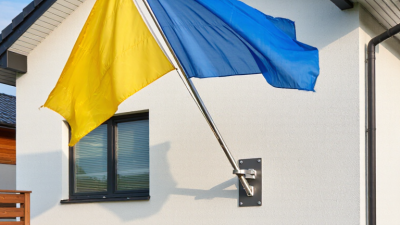
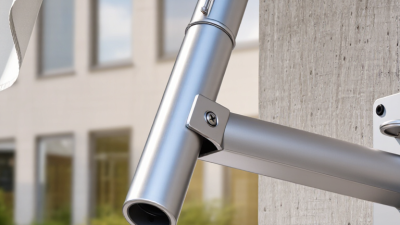
A 2:3 flag measures 60 by 90 centimetres, giving a clear reference when choosing a wall bracket. A single-point bracket is compact, but the pole can rotate in gusts. A two-point bracket steadies the pole at separate contact points. Angled brackets often keep the flag away from eaves, signs, and rough wall surfaces. Small details matter. Check the pole’s diameter and the bracket’s stated fit before ordering; similar-looking sockets may not match.

Wind load deserves attention. ASCE/SEI 7-22 calculates velocity pressure using a formula that includes wind speed squared, along with exposure and other site factors. In practical terms, doubling wind speed can greatly increase pressure on the flag and its projecting pole. This standard is a useful engineering reference, not a substitute for a site-specific assessment.

A 60-by-90-centimetre flag may look modest, yet its fabric can pull hard on masonry anchors during gusts. Match fixings to the wall material, and inspect for looseness or corrosion. Bracket choice is sometimes treated as decoration; that is an easy assumption to reconsider.

Materials Compared: ASTM A240 Type 304/316 Stainless Steel and 6063-T5 Aluminum

For a wall-mounted flagpole, material choice affects weight, corrosion resistance, and bracket loading. ASTM A240 Type 304 and 316 cover stainless steel plate, sheet, and strip, so ask suppliers to identify the actual product form and provide traceable material records. Type 304 suits many inland settings and handles ordinary rain well. Near salt spray, Type 316’s molybdenum offers better resistance to chloride corrosion. It is not immune. Crevices around fasteners can still stain when water sits against the wall.

6063-T5 aluminum is widely used for extruded pole sections. It is lighter than stainless steel, easing installation and reducing dead load on masonry or timber. Its oxide layer helps resist weathering; anodizing or a durable coating can add protection and color. Check wall thickness, finish coverage, and end-cap drainage. Alloy grade alone cannot predict service life. Compare bracket spacing, fastener grade, and anchor capacity against pole length and local wind exposure. Details matter. A chipped coating or stainless fastener without suitable isolation may create maintenance problems. Supplier claims deserve a closer look.

Wall-Mounted Flagpole Materials: Minimum Strength Comparison

A comparison of specified minimum tensile and yield strength for ASTM A240 Type 304/316 stainless steel and 6063-T5 aluminum.

The chart shows representative specification minimums in MPa: ASTM A240 Type 304 and 316 are shown at 515 MPa tensile strength and 205 MPa yield strength; 6063-T5 aluminum is shown at approximately 150 MPa and 110 MPa, respectively. Actual requirements can vary with product form, dimensions, and the applicable standard edition. Strength alone does not determine corrosion resistance or suitability for a particular installation.

Supplier Ranking Criteria: ISO 9001, MOQ, Export Experience, and OEM Services

A credible comparison of China’s wall mounted flagpole suppliers should begin with verifiable quality controls, not polished catalog photos. ISO 9001 certification can indicate a documented quality management system, but buyers should check its validity and scope. Ask how the supplier inspects pole diameter, wall brackets, welds, and surface finish. Details matter. A certificate alone cannot confirm that every shipment meets the same standard.

Minimum order quantity affects both cost and risk. A low MOQ may suit a trial order, while larger batches can reduce unit prices. Confirm whether samples are available and whether packaging, mounting hardware, and custom dimensions count toward the MOQ. Export experience is another useful measure. Ask for examples of shipments to your region, plus details on packing methods and transit damage claims. Experience helps, but it is not a guarantee.

OEM services should be judged by practical capabilities: drawing review, material options, logo placement, color matching, and packaging changes. Request a production sample or written specification before approving a larger order. Compare response times and how clearly technical questions are answered. A supplier may offer many options yet struggle to keep them consistent. Ranking criteria also have limits; factory visits may be impractical, and paperwork can miss day-to-day workmanship. Use the same checklist for all ten candidates, then weigh evidence against your project’s actual needs.

China Top 10 Wall Mounted Flagpole Suppliers? — Supplier Ranking Criteria: ISO 9001, MOQ, Export Experience, and OEM Services

Supplier evaluation scorecard. This table defines a practical ranking method; it does not claim to verify or rank specific companies. Confirm all supplier-specific information directly before purchasing.

No. Evaluation Criterion Weight Evidence to Request Assessment Guidance
1 ISO 9001 Quality Management 15% Current certificate, certificate number, issuing body, validity dates, and certified business scope. Check certificate details with the issuing certification body and confirm that the scope covers the relevant manufacturing or trading activities.
2 Minimum Order Quantity (MOQ) 10% Written MOQ for each wall-mounted flagpole model, finish, length, and customization option. Compare like-for-like quotations. Confirm whether the MOQ applies per order, model, color, or custom specification.
3 Export Experience 15% Redacted export references, destination-market experience, shipping-document examples, or customer references where available. Assess experience with the buyer’s destination, packaging requirements, trade terms, and applicable import documentation.
4 OEM and Customization Services 15% Documented options for dimensions, finishes, mounting brackets, packaging, logo marking, and private-label requirements. Request drawings or a sample specification and confirm tooling charges, artwork approval, sample lead time, and ownership of custom designs.
5 Wall-Mount Product Range 10% Product catalog or drawings showing pole lengths, bracket styles, mounting angles, and compatible flag sizes. Check that the offered configuration suits the installation surface and intended use; request load or installation guidance where relevant.
6 Materials and Finish Information 10% Material grades or specifications, finish details, and available product or material test reports. Compare material and finish specifications against the project’s indoor or outdoor environment rather than relying on general marketing terms.
7 Quality Inspection Process 10% Inspection checklist, sample approval process, defect-handling procedure, and pre-shipment inspection options. Confirm how dimensions, finish, bracket fit, packaging, and order quantities are checked and documented.
8 Production and Delivery Lead Time 5% Quoted production schedule, sample lead time, shipping estimate, and stated assumptions. Compare the same order quantity and customization level, and clarify when the delivery schedule starts.
9 Technical Documents and Communication 5% Product specifications, installation instructions, quotation details, and a named contact for technical questions. Give credit for clear, consistent documentation and prompt responses to specification questions.
10 Commercial Terms and After-Sales Support 5% Quotation validity, payment and delivery terms, warranty policy, spare-parts availability, and complaint-resolution process. Review the written terms and confirm what remedies apply to defects, transit damage, or products that do not match the approved specification.

China’s Top 10 Wall-Mounted Flagpole Suppliers: Products and Capabilities

China’s Top 10 Wall-Mounted Flagpole Suppliers: Products and Capabilities

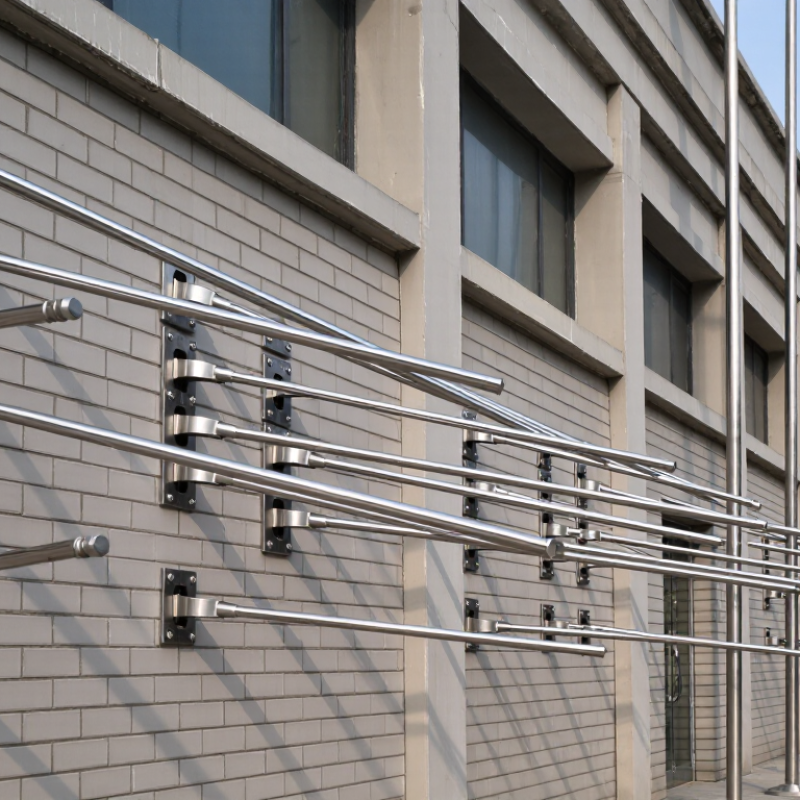
Comparing ten suppliers is more useful when product details are checked against installation needs. Look for fixed and tilting poles, wall brackets, base plates, and clear drawings showing dimensions and materials. Ask how suppliers verify welds, surface finishes, and fasteners. A catalogue photo cannot show bracket thickness. Small details matter.

Material scale offers context, not proof of quality. The International Aluminium Institute reported about 70.6 million tonnes of global primary aluminium production in 2023. World Steel Association’s World Steel in Figures 2024 reported 1,892.2 million tonnes of crude steel production for 2023. These figures describe broad supply, not any supplier’s grade or workmanship. Buyers should request material specifications, coating details, inspection records, and wind-load calculations for the intended pole and site.

Strong suppliers explain how mounting changes across concrete, masonry, and other wall types. They should clarify the required anchors rather than promise one bracket fits every surface. Ask about custom lengths, corrosion-resistant finishes, sample checks, and export packaging. One gap in many comparisons is after-sales support; it is easy to overlook until installation. A polished catalogue is not proof. Verify the engineering documents before comparing prices.

Technical Checks: Pole Diameter, Bracket Load, Corrosion Resistance, and Wind-Test Data

When comparing wall-mounted flagpole suppliers, check the stated pole diameter and wall thickness, not diameter alone. A thin tube can flex even when its outside measurement looks substantial. Match the pole to the flag’s size and exposure, then confirm the bracket fits its diameter without improvised shims. Measure carefully. A few millimetres matter.

Bracket load ratings should specify whether they cover static weight, wind movement, or both. Ask how the rating was tested and what wall material and fasteners were used. A bracket attached to solid masonry behaves differently from one fixed to timber framing. Corrosion resistance also deserves close inspection: request the material grade or coating details, and check vulnerable areas such as welds, cut edges, and drainage holes. Salt air and trapped water can expose weak protection quickly. Small details matter.

Request wind-test data that names the pole length, flag dimensions, mounting arrangement, and test conditions. A single “wind rated” figure tells you little without that context. Look for documented methods and repeatable results, not just a confident sales claim. Paper is not proof. One uncertainty often remains: real gusts and building surfaces vary, so test data cannot guarantee performance at every site. Compare suppliers by how clearly they explain these limits and support their specifications.