Fifty pieces is not a small order. It is sixteen small orders that have to arrive looking like one.
A US consumer brand runs a customer gifting programme. For its latest drop it did not want one hero product with a few add-ons. It wanted sixteen different items — headwear, soft goods, drinkware, desk accessories and a metal badge — every one of them carrying the same artwork, and every one of them ordered at fifty pieces.
That combination, many styles and small quantities, is where most gifting projects die. Not because any single item is difficult to make, but because the fixed cost of setting up sixteen different processes has to be paid whether you make fifty pieces or five thousand. This is how the order was put together, and why it came out consistent.
What the order covered
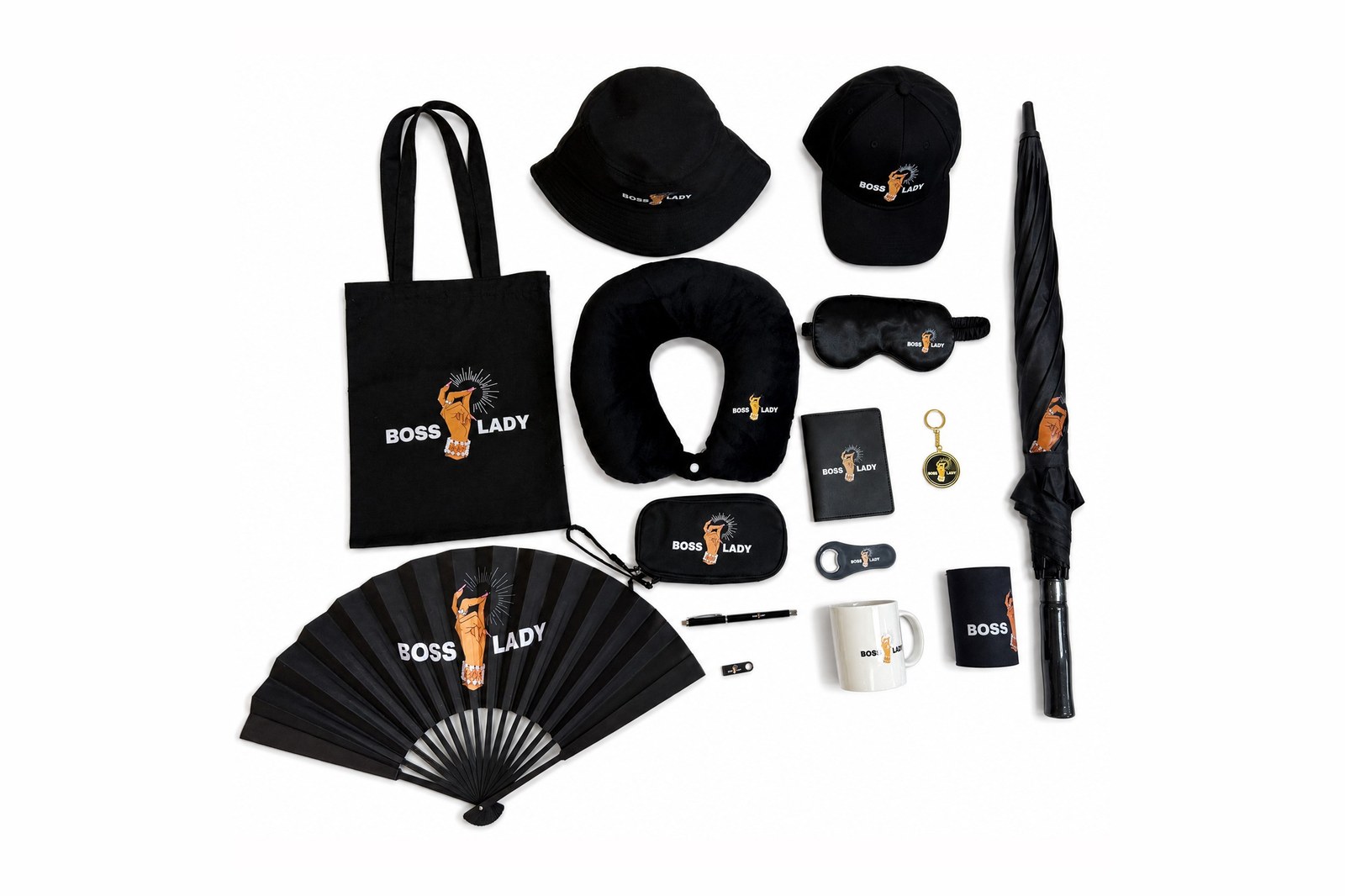
Sixteen SKUs, fifty pieces each, eight hundred units in total:
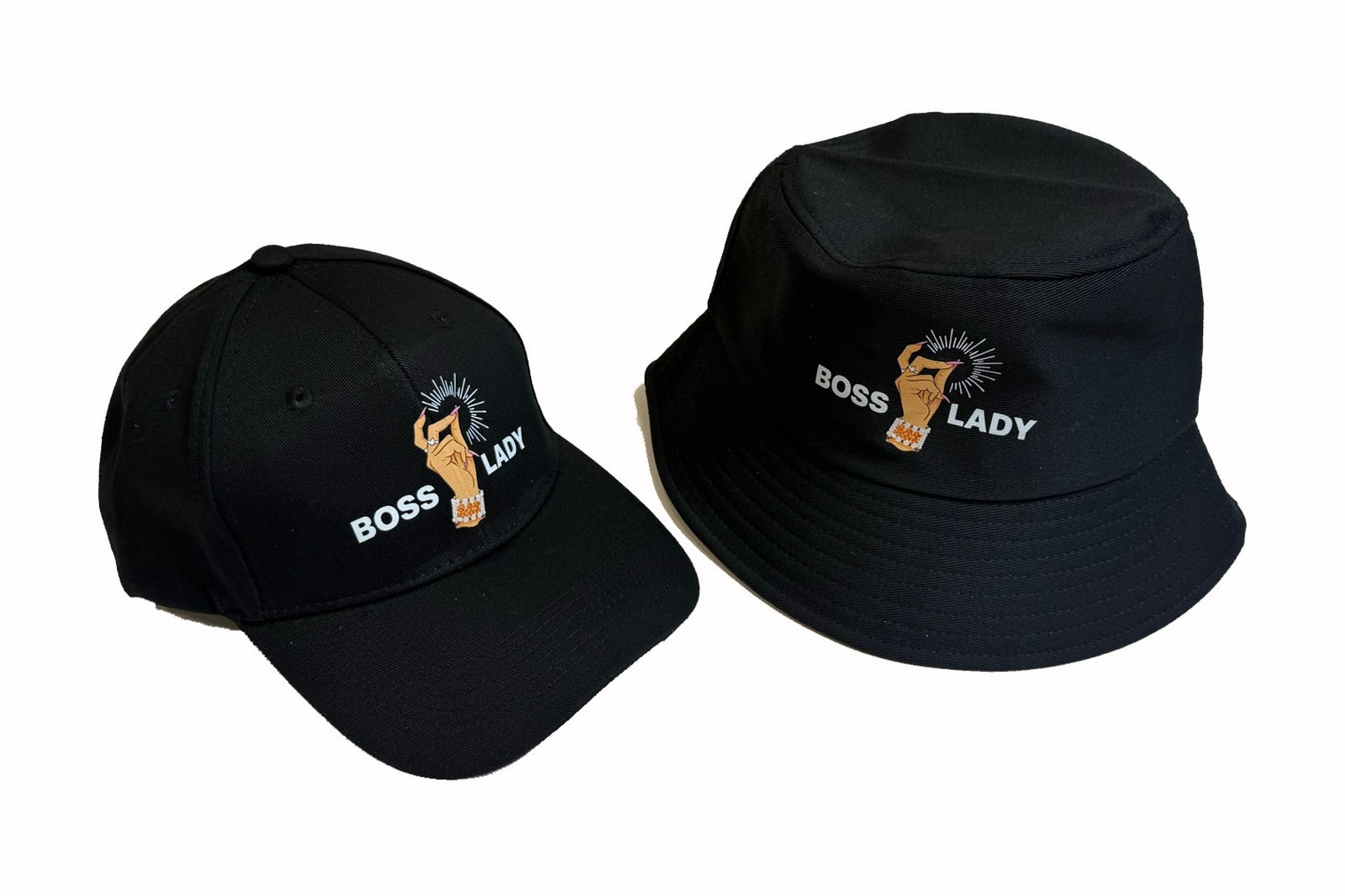
- Headwear — a structured baseball cap and a bucket hat
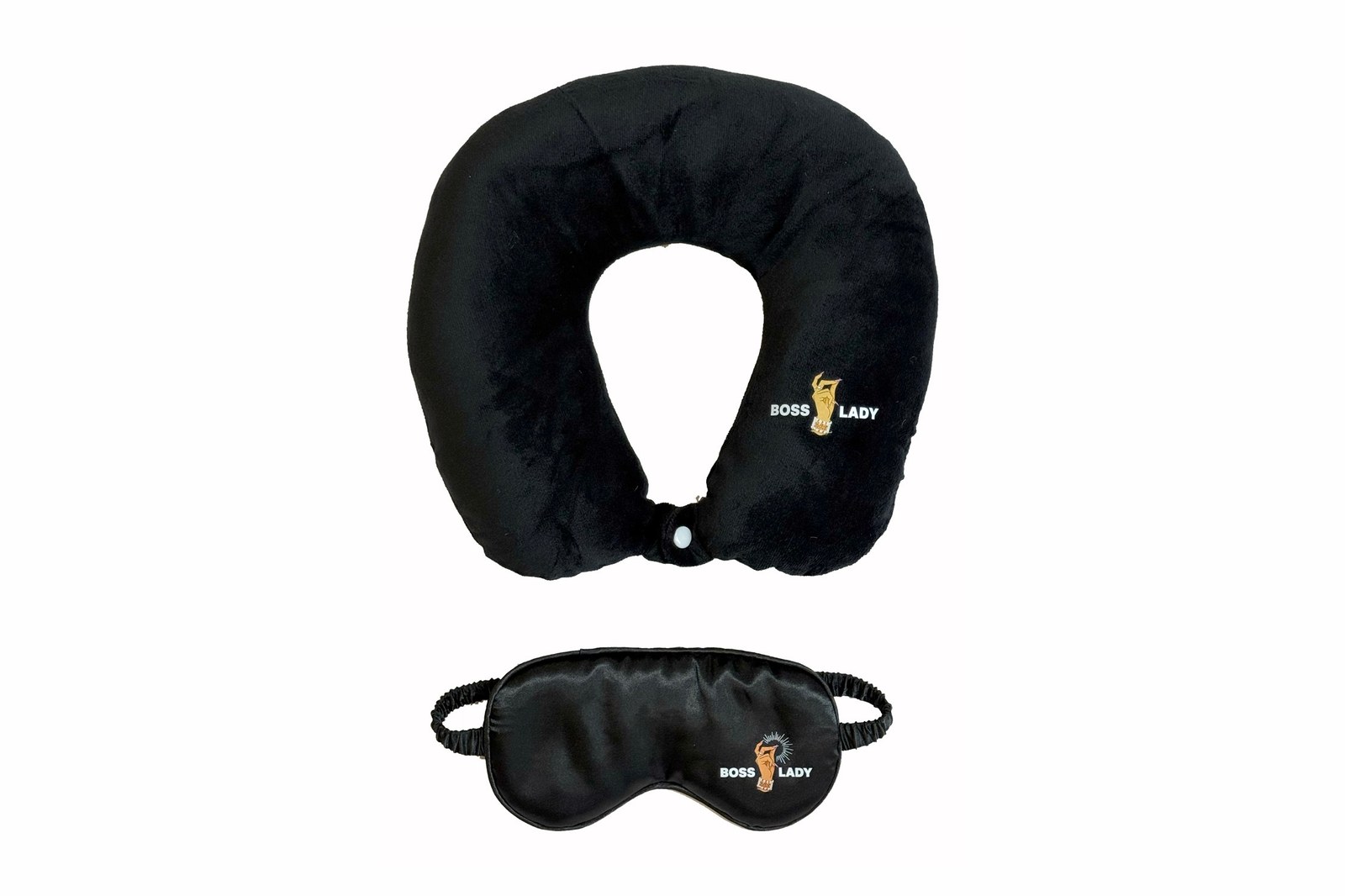
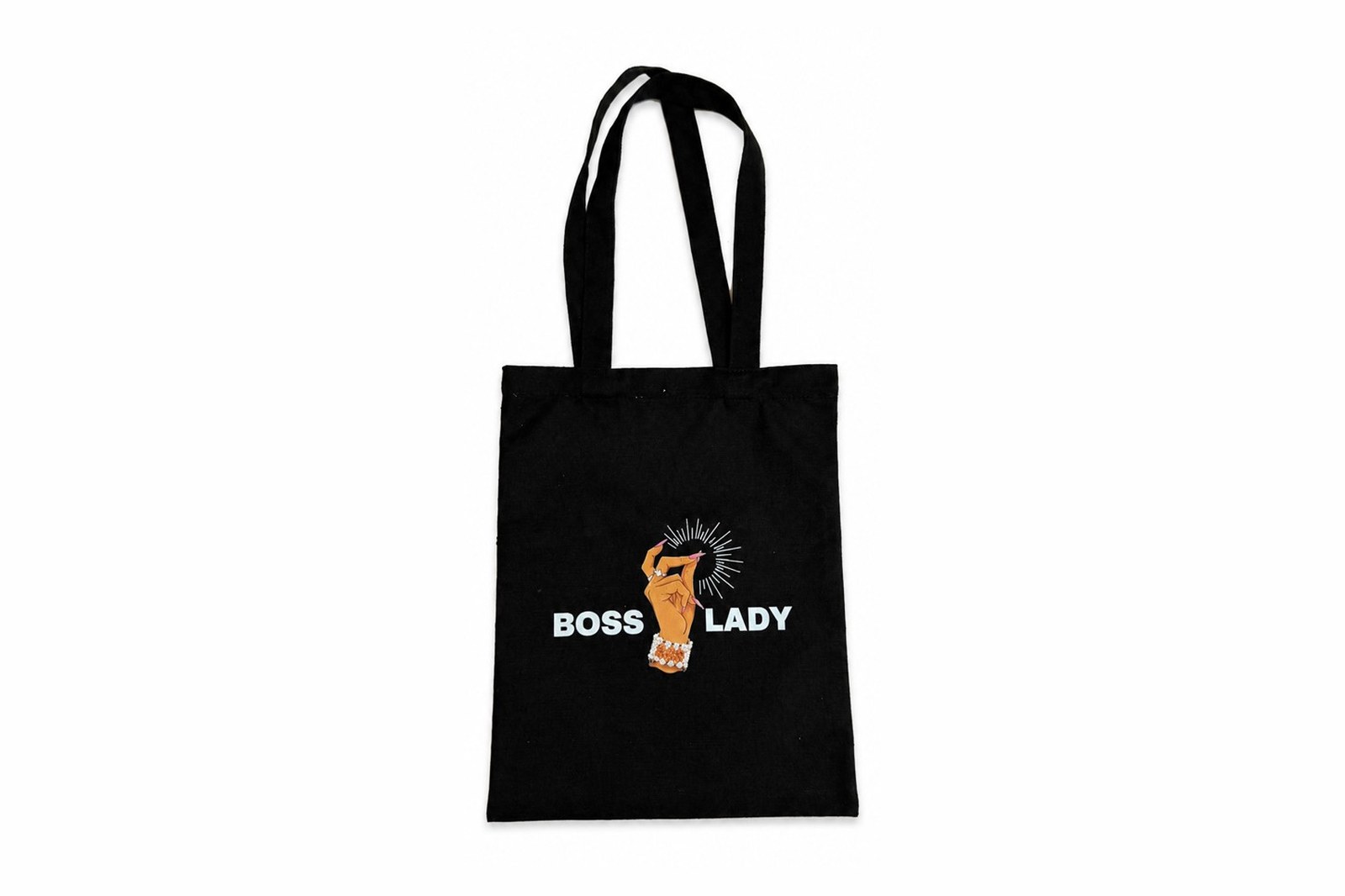
- Soft goods — a cotton canvas tote, a satin sleep mask, a U-shaped neck pillow and a pleated folding hand fan
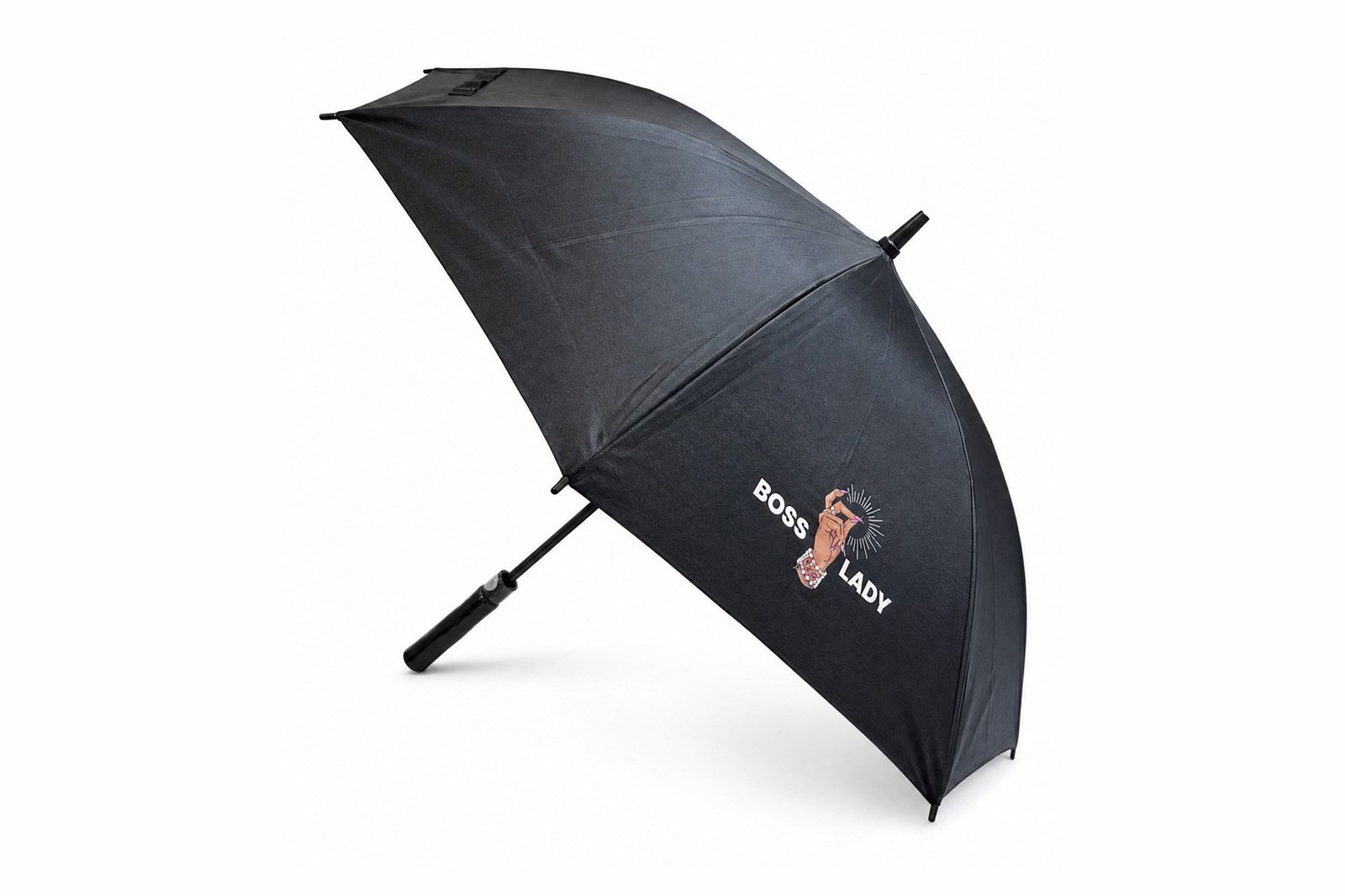
- Outdoor and drinkware — a compact umbrella, an insulated bottle sleeve and a white ceramic mug
- Everyday carry — a slim card holder and a zip cable pouch
- Metal and plastic goods — a bottle opener, a ballpoint pen, a USB flash drive and a die-struck enamel badge
- Sealed goods — individually wrapped face masks, which is also why they are the one item not photographed here
Why fifty is the difficult number
Custom work carries a set-up cost that does not shrink with quantity. Every printed item needs its own screens or plates. Every embroidered logo needs its own digitised file. The enamel badge needs a steel die cut before a single piece exists. Spread those costs over fifty units and the set-up alone can be worth more than the product.
The trade’s usual answer is a minimum order — come back at five hundred or a thousand a style. Do that across sixteen items and a buyer commits to thousands of units of merchandise it may never hand out, plus sixteen purchase orders, sixteen delivery windows, and sixteen chances for the colours to drift apart.
There is a second problem that is easier to miss. The same emblem has to survive being stitched in thread, printed on satin, pad-printed on a pen barrel, fired onto ceramic and hand-filled into enamel between gold-plated lines. Each of those processes reads line weight and colour differently. Sixteen items made by sixteen suppliers will not match by accident.
How the order was planned
Instead of quoting sixteen separate jobs, the order was rebuilt as a single production plan and grouped by how each item is decorated:
- Embroidery — cap, bucket hat, neck pillow
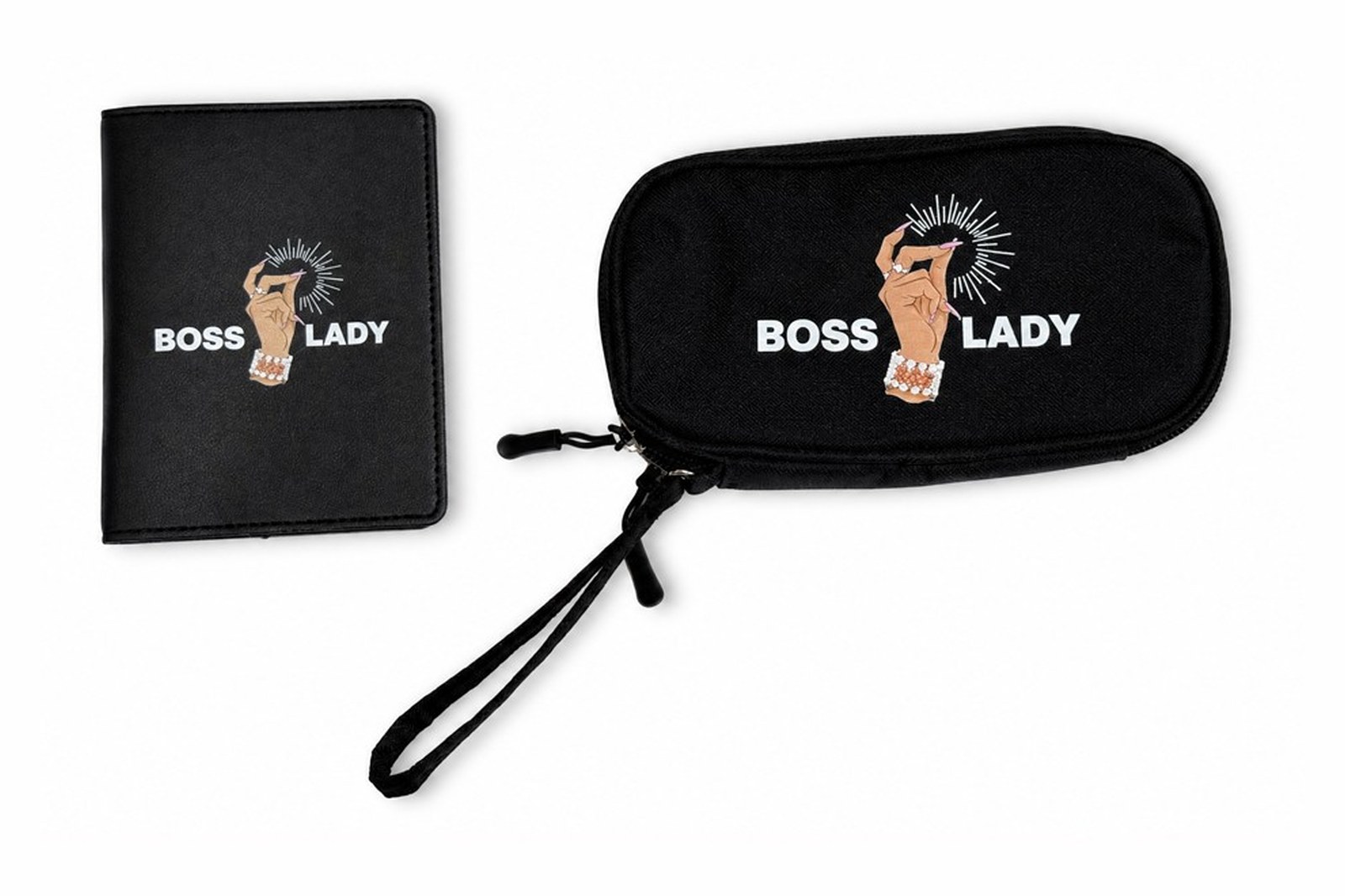
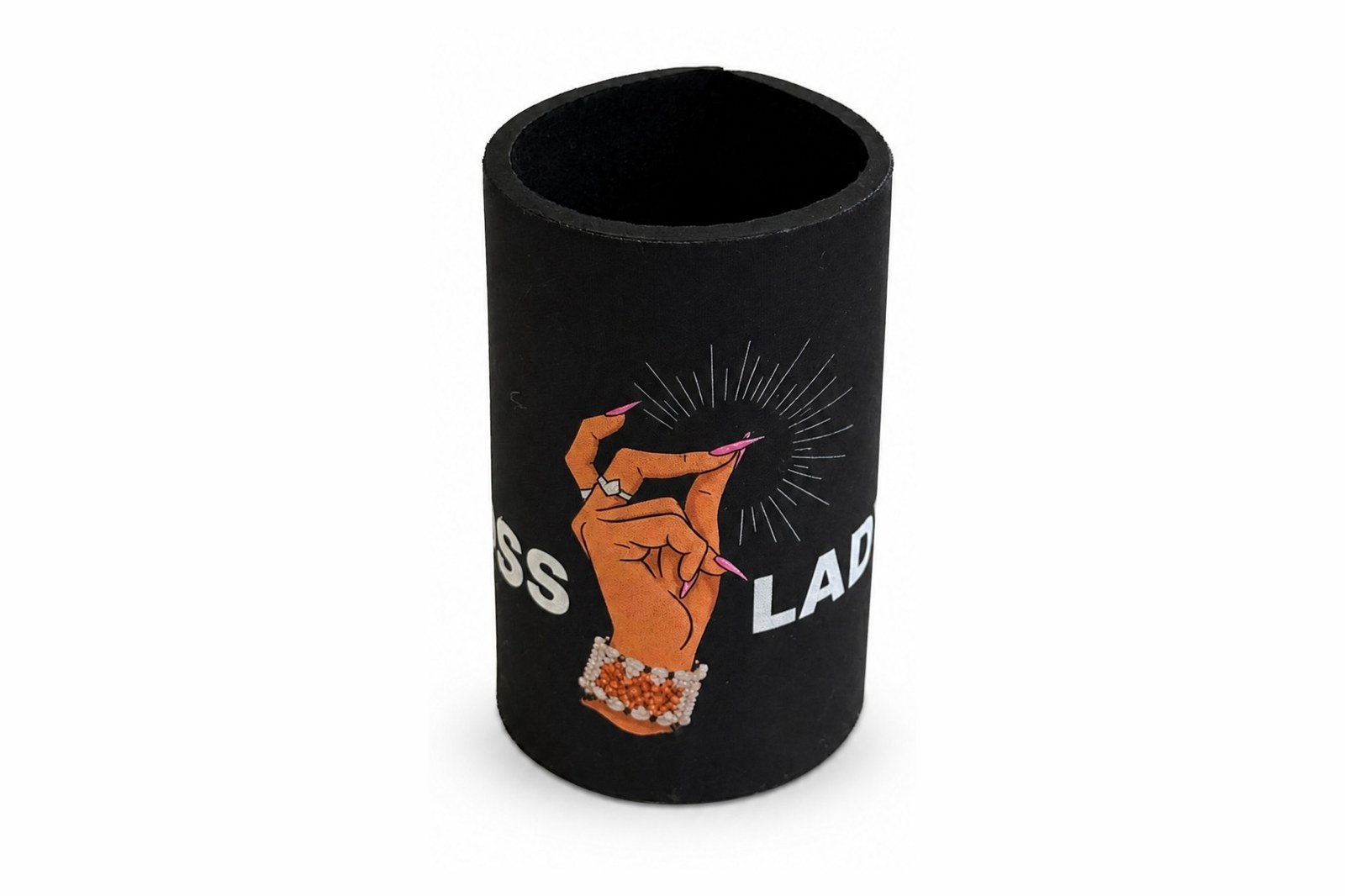
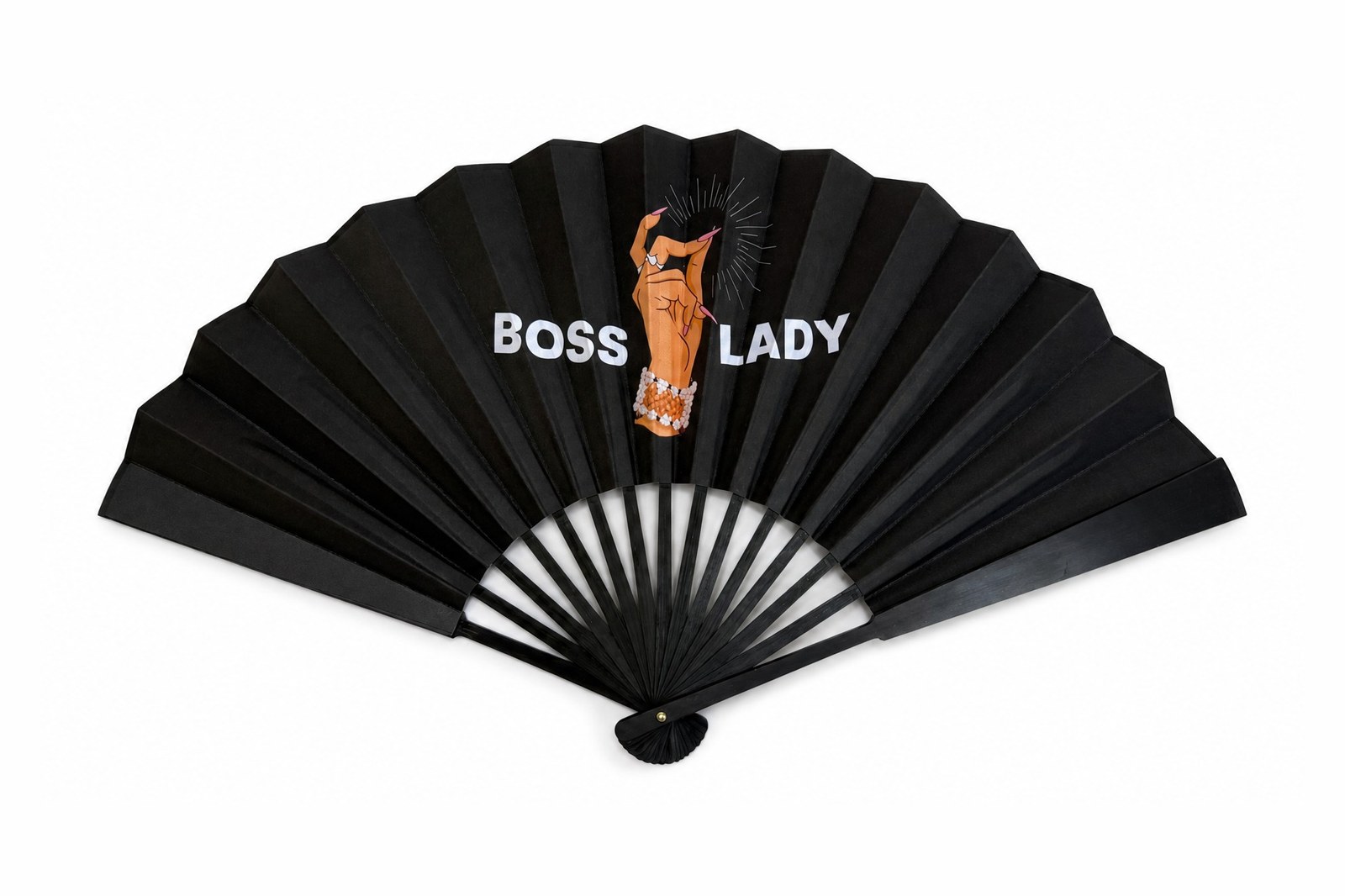
- Fabric print — tote, sleep mask, folding fan, umbrella, bottle sleeve, cable pouch, card holder
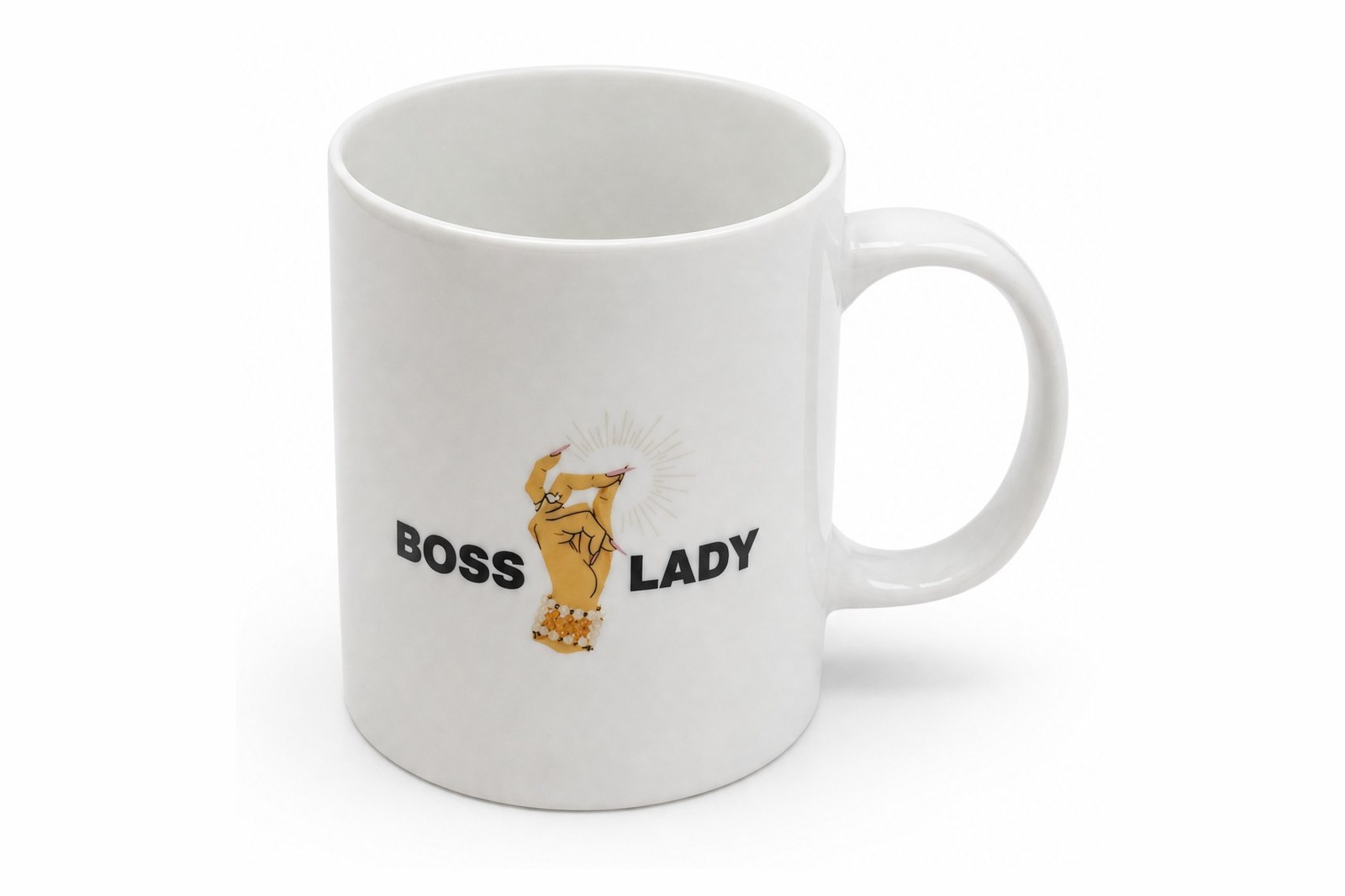
- Hard-surface print — mug, bottle opener, pen, USB drive
- Enamel — the badge
Grouping this way means the embroidery programme is digitised once and reused across three items, the print artwork is colour-separated once into a single master, and the enamel die — the most expensive single set-up in the order — is carried by the whole programme instead of by fifty pieces alone.
The badge that should not have worked at fifty
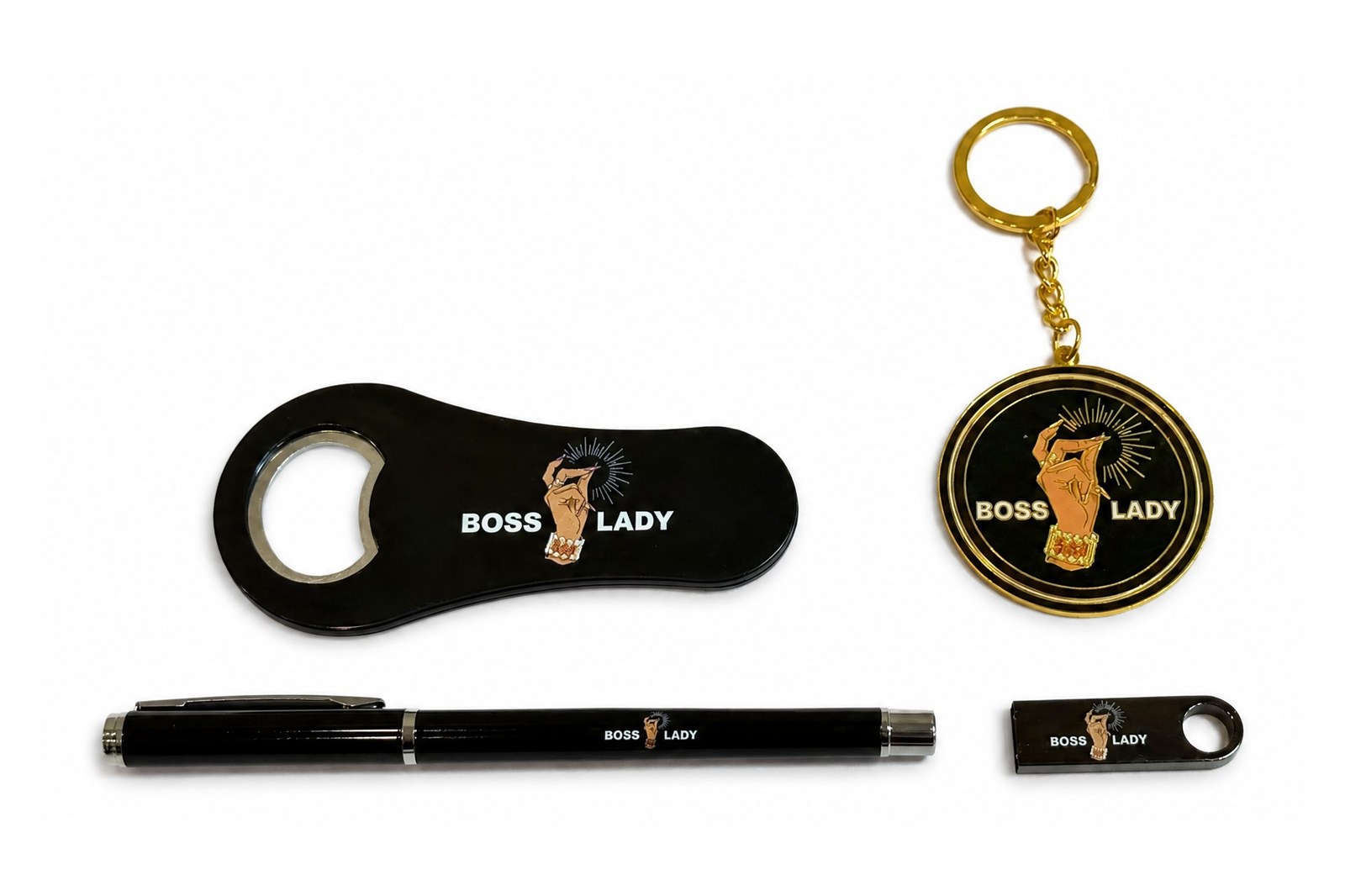
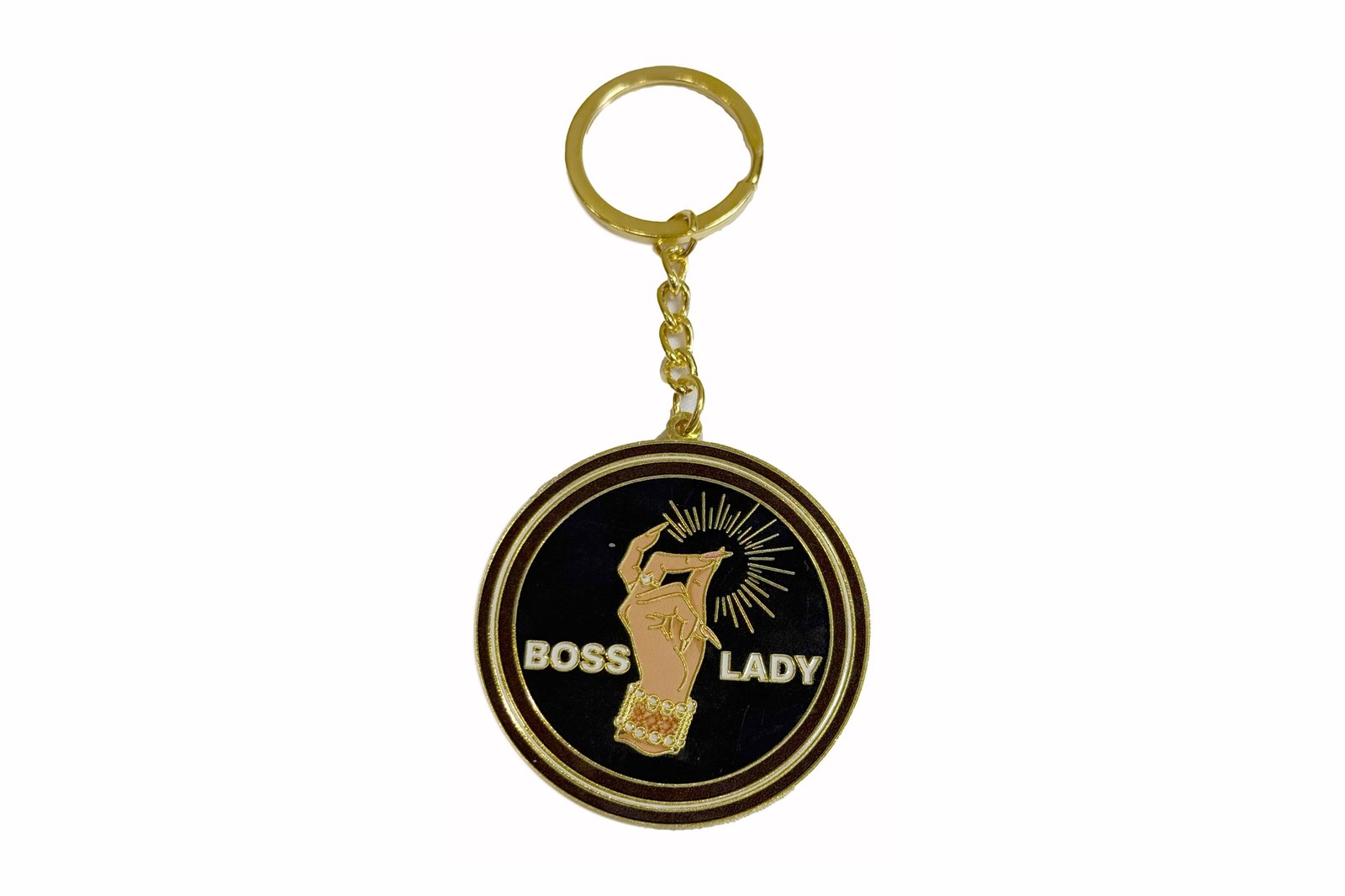
Enamel is where small quantities normally stop. The badge is die-struck: a steel die is cut, the metal is stamped, and enamel is hand-filled between the raised lines before curing and polishing. The die is a one-off cost with no relationship to order size, which is exactly why custom enamel is usually quoted in the hundreds.
This artwork could not be simplified. Fine radiating lines, a dense black enamel field, gold plating on every raised edge, and a soft gradient across the hand that enamel alone cannot reproduce.
It was handled in three passes. First a die layout that kept every hairline above the minimum width enamel can hold without bleeding. Then hand-filled enamel, cured and polished so the gold sits level with the colour instead of standing proud of it. Finally a printed detail layer, registered inside the metal outline, to carry the gradient. Fifty pieces, no colour substitution, no “close enough” enamel stock.
One artwork, sixteen substrates
With the artwork fixed, the remaining work is translation. Thread has no gradient, so the embroidery was matched to a fixed thread chart. Satin takes ink differently from canvas, so the sleep mask and the tote were proofed separately. Ceramic fires at a temperature that would destroy a badge, and pad printing on a pen barrel needs different dot gain from screen printing on fabric.
Every item was proofed against the master file, never against the item next to it. That is the step that decides whether a set like this photographs as one collection or as sixteen purchases.
The finished pieces
Sixteen lines finish on different schedules, which is where small programmes usually fall apart. Each SKU was inspected as it came off its own line — colour against the master, registration on the print, enamel fill on the badge — and everything was held until the last item cleared, then shipped as one consolidated order rather than sixteen partial ones.
If you are sourcing a set like this
Four things remove most of the back-and-forth:
- The full item list with quantities, including the ones you think are too small to ask about. A fifty-piece line is a decision we can make; finding out about it after the other fifteen are quoted is what causes a second round.
- Whatever artwork exists, in whatever state. A logo, a reference product and a colour direction are enough to start. What matters is knowing at the beginning what has to be built.
- Where the gift has to land — handed out at an event, posted to customers, or packed inside a retail order. It changes the packing, not the printing.
- Whether the set must ship together. Consolidating means holding finished lines until the slowest one clears, which has to be agreed at the start rather than discovered at the port.
Ordering
Mixed gift sets like this one are built on the same lines as our OEM/ODM programme: one artwork standard, decoration matched per material, and quantities that stay at what the programme actually needs. Fifty pieces a style is a workable starting point for a multi-item set; the constraint is never the number, it is whether the set-up can be spread across the whole order.
—
Related reading
- Enterprise Corporate Gift Customization Project
- Delivering Custom Event Merch to the Maldives in 15 Days
- Fixing the Colour Before Production: US Flag Sets for a Car Dealership
- From Sample Test to 800 Sets: A Canadian Sauna Manufacturer
- Custom Flag Printing Methods: Sublimation, Screen, Embroidery
- OEM / ODM Custom Manufacturing
- Custom Flags & Banners
- Qatar Hand-Held Flag Pole Project