Leave Your Message

2026 How to Choose a Telescopic Flag Pole?

Choosing a Telescopic Flag Pole involves more than comparing height and price. The right model must suit your ground conditions, wind exposure, display purpose, and maintenance expectations. A residential garden needs different support than a dealership, sports venue, or public entrance.

Experienced installers often repeat one practical principle: “Choose for the site first, and choose height second.” This advice reflects years of field experience, although it should be verified with a named manufacturer or certified installer before publication. That small uncertainty matters. Product claims can change.

A quality Telescopic Flag Pole should extend smoothly, lock securely, and resist unnecessary movement. Check the tube material, wall thickness, locking system, base design, and replacement-part availability. Aluminum is lightweight and commonly used. Fiberglass can offer useful flexibility in exposed locations. Neither option is perfect.

Measure carefully.

Think about daily use. Will staff raise the flag each morning? Will children or visitors access the base? Can the pole be lowered safely during severe weather? A convenient design may reduce labor, but convenience should never replace structural reliability.

This guide explains how to compare telescopic poles in 2026. It examines materials, operating systems, wind performance, installation details, and long-term value. It also questions popular assumptions, because the cheapest pole may become expensive after repeated repairs. Real-world conditions are rarely as simple as a product photograph.
2026 How to Choose a Telescopic Flag Pole?

Define Flagpole Use and Choose a Practical 15–30 ft Height

2026 How to Choose a Telescopic Flag Pole?

Start by defining how you will use the flagpole. A small yard display may need only 15 feet, while an entrance, event area, or larger property may look better at 20–30 feet. Measure nearby trees, rooflines, and viewing distances before choosing. A 15-foot pole often feels balanced beside a single-story home. A 25-foot pole creates stronger visibility across an open field. Taller is not always better.

Consider the ground, wind, and daily handling. Telescopic sections should lock firmly and move smoothly during setup. Choose a stable base suited to soil, paving, or temporary placement. Match the flag’s size to the pole’s height and strength. Oversized fabric can pull hard during gusts. Check weather guidance and local installation requirements. I have found that many buyers focus on height but underestimate storage space and repeated assembly. That mistake becomes annoying quickly.

Tips: Begin with 15–20 feet for ordinary residential use. Select 25–30 feet when distance, visibility, or a broad landscape demands it. Inspect every locking collar before raising the pole. Lower it during severe weather if practical. Leave enough clearance from branches, wires, walls, and walkways. Test the setup with the actual flag, not a lighter substitute. A professional installer can assess uncertain ground conditions, although personal judgment still matters.

Compare 6061-T6 Aluminum, Fiberglass, and Steel by Weight and Strength

2026 How to Choose a Telescopic Flag Pole?

A telescopic flag pole must balance weight, stiffness, and daily handling. Material selection changes that balance significantly. 6061-T6 aluminum offers a strong, relatively light structure with good resistance to outdoor corrosion. It feels manageable during setup, especially for taller poles. However, thin aluminum sections can bend or dent under sudden loads. Strength depends on diameter, wall thickness, joints, and overall engineering.

Fiberglass is usually lighter than steel and electrically nonconductive. Its flexibility helps absorb gusts without immediately transferring shock to every section. I have found it comfortable to carry across uneven ground. Still, fiberglass can become brittle after prolonged sunlight exposure or repeated impact. A small surface crack may deserve attention. It is not always easy to see.

Steel provides excellent strength and resists crushing at connection points. That extra strength brings extra weight. Moving a tall steel pole often requires more effort and a firmer base. Galvanized or coated steel can reduce corrosion, but damaged finishes may expose the metal. Weight figures should never be compared without checking pole height, section count, wall thickness, and hardware. A lighter pole is not automatically weaker, and a heavier pole is not automatically safer. That assumption can fail. Examine the joints closely, because telescoping connections often determine real-world stability more than the material name alone.

Representative material comparison for telescopic flag poles. Density indicates relative material weight at equal volume, while tensile strength indicates resistance to pulling forces. Actual pole weight and stiffness also depend on tube diameter, wall thickness, taper, joints, and manufacturing design.

Calculate Wind Loads with ASCE/SEI 7-22 Design Wind Speeds

How to Choose a Telescopic Flag Pole?
Calculate Wind Loads with ASCE/SEI 7-22 Design Wind Speeds

Choosing a telescopic flag pole starts with local wind data, not pole height alone. ASCE/SEI 7-22 defines basic wind speed as a three-second gust. The correct value depends on location and risk category. Its wind-pressure method uses qz = 0.00256KzKztKdV², measured in pounds per square foot. Because pressure rises with the square of wind speed, a 20% speed increase creates about 44% more pressure. A quick mph guess is tempting, but it is a weak habit.

Calculate the projected area of the flag and exposed pole sections. Then estimate force with F = qCdA, followed by base moment, M = Fh. ASCE/SEI 7-22 Tables 26.6-1 and 26.10-1 help identify exposure and adjustment factors. Local terrain matters greatly. A sheltered yard and an open coastal site should not use identical assumptions. NOAA’s Storm Events Database can also support a site review by showing recorded wind events. Still, recorded weather is not a replacement for the design wind map.

Tips: Check the tallest extended section, hinge, sleeve, and ground connection. Inspect every season. A partly open flag can flap violently and create changing loads. I have seen calculations overlook rope hardware. That small detail can control failure. For unusual heights, weak soil, or public installations, ask a licensed structural engineer to verify the final design.

Evaluate Section Locks, Collapsed Length, and Raising Mechanisms

2026 How to Choose a Telescopic Flag Pole?

Evaluate Section Locks, Collapsed Length, and Raising Mechanisms

Section locks deserve close attention because they carry the pole’s weight in changing weather. During a windy weekend installation, I found that a slightly loose collar created noticeable movement near the top. Twist locks should open smoothly, grip firmly, and resist slipping after repeated adjustments. Push-button locks need clean holes and strong springs. Test each section with gloves. Small details matter.

Collapsed length affects transport, storage, and daily convenience. Measure the packed pole before buying, not just its extended height. A pole that fits inside a garage may still overwhelm a small car. Check the carry case dimensions, too. Manufacturers sometimes list only the shortest tube length. That omission can cause trouble.

Raising mechanisms also shape the user experience. A manual telescoping system is simple and usually easy to inspect. Internal ropes and pulleys can provide smoother raising, but they add parts that may wear. Pull the mechanism slowly and listen for grinding, sudden resistance, or uneven movement. Keep fingers away from closing joints. I once chose a taller model without testing its balance, and raising it felt awkward. That choice was too optimistic. Look for corrosion-resistant fittings, replaceable ropes, and clear maintenance instructions before installation.

Verify Base Stability, ASTM-Grade Hardware, Warranty, and Maintenance

2026 How to Choose a Telescopic Flag Pole?

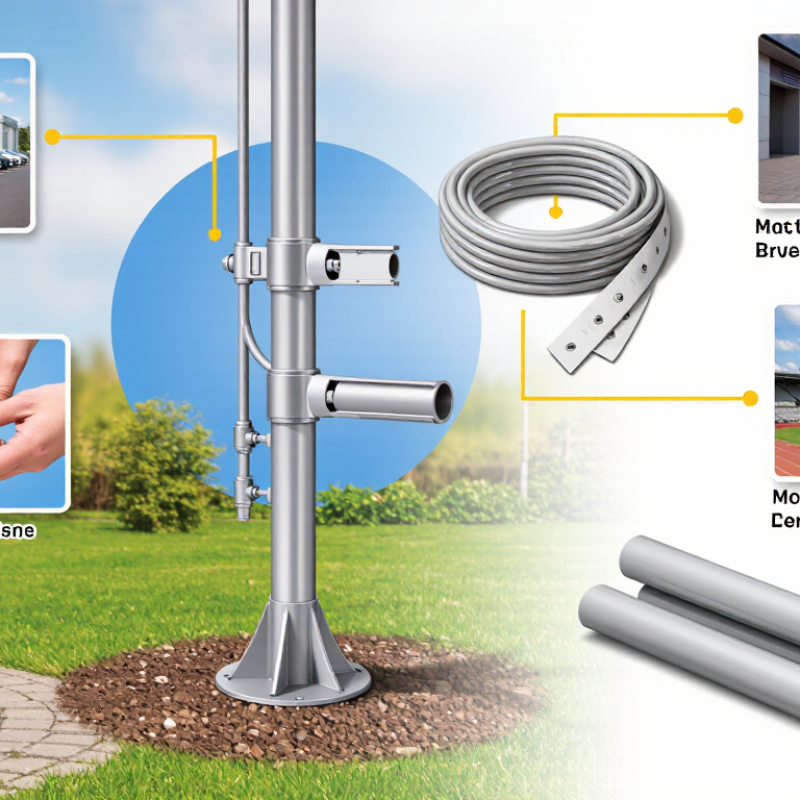
Base stability should guide your decision, not appearance. Check the soil, mounting surface, and local wind exposure before ordering. A pole installed in loose soil may lean after heavy rain. Concrete bases need enough depth and width for the pole’s height. Follow the supplied footing dimensions carefully. Do not assume a heavier pole always means a safer installation. The correct balance depends on design, soil, and wind-load ratings.

Inspect the hardware closely. Look for corrosion-resistant fasteners, locking collars, pins, and hinges made to a documented ASTM standard. “ASTM-grade” should not remain an advertising phrase. Ask for the applicable specification, test details, and material information. Hardware should move smoothly without sharp edges or excessive play. A small defect can become serious after repeated raising and lowering.

Read the warranty before purchase. Confirm coverage for the pole, fittings, finish, and labor separately. Check exclusions for wind damage, improper installation, and neglected maintenance. Keep invoices and installation records. They may support a future claim. Maintenance is simple but easy to forget. Lower the pole during severe weather, rinse away salt or dust, and inspect joints every few months. Watch for fading, cracks, loose pins, or water trapped inside the sections. One overlooked collar can damage the entire assembly. Recheck your routine each season.

2026 How to Choose a Telescopic Flag Pole? - Verify Base Stability, ASTM-Grade Hardware, Warranty, and Maintenance

Selection Dimension Practical Target or Specification What to Verify Before Purchase Common Risk or Maintenance Concern
Intended Installation Choose a ground-mounted pole for permanent outdoor use. Use a portable or temporary model only where the supplied base is designed for the expected surface and wind exposure. Confirm whether the pole is intended for soil, concrete, paving, vehicle use, events, or temporary display. Check the installation instructions for required anchoring. A portable base can move or overturn when used on an exposed site without ballast or anchoring.
Pole Height Select a height that keeps the flag clear of nearby trees, roofs, vehicles, and pedestrian routes. A taller pole generally creates greater wind leverage at the base. Measure the available vertical clearance and review the manufacturer’s stated maximum flag size and operating height. An oversized flag on a tall, lightly anchored pole can increase bending loads and accelerate wear at joints and fittings.
Flag Size and Weight Use a flag within the pole’s stated size and weight limits. Mesh or porous flags can reduce wind loading compared with solid fabric, but they are not automatically suitable for every pole. Compare the flag’s width, length, fabric weight, grommet or sleeve arrangement, and the pole’s published capacity. A large solid flag may act like a sail, producing excessive pull on the top section, clips, rope, and base.
Base Stability Prefer a base that matches the surface and includes a defined anchoring or ballast method. For permanent installations, use a properly sized foundation or ground sleeve where required by the instructions. Verify base dimensions, material, ballast capacity, anchor-hole pattern, foundation depth guidance, and whether the base is rated for the selected pole height and flag area. A wide-looking base is not proof of stability. Soft soil, uneven paving, frost movement, and inadequate ballast can cause tilting or overturning.
Wind Exposure Consider local wind conditions, coastal exposure, open fields, rooftops, and corridors between buildings. Do not treat a generic wind number as a universal safety rating. Look for a documented wind limit that states the permitted flag size, pole height, installation method, and whether the flag must be removed above that limit. Wind ratings may not apply when the flag is wet, damaged, oversized, continuously displayed, or installed on a different base.
Telescoping Sections Sections should extend smoothly, lock securely, and remain aligned when fully raised. Positive locking collars or pins are preferable to friction alone for safety-critical positioning. Inspect section overlap, locking method, locking-pin diameter, adjustment range, and whether replacement collars or pins are available. Sand, grit, ice, or deformation can prevent a collar from locking fully. Never rely on a partially engaged lock.
Hardware Material Outdoor hardware should resist corrosion and galvanic interaction. Common choices include stainless steel, hot-dip galvanized steel, or UV-stable engineered polymer components where appropriate. Request the material and grade for bolts, nuts, washers, pins, clips, and collars. “Stainless” alone does not identify a specific grade or performance level. Dissimilar metals in salt or wet environments can corrode faster. Replace hardware showing pitting, cracking, stripped threads, or loss of locking function.
ASTM-Referenced Hardware ASTM references should identify the applicable product specification or test method. For example, ASTM A276 covers stainless steel bars and shapes, while ASTM F593 covers stainless steel bolts, screws, studs, and nuts. Ask for the exact ASTM designation, material condition or alloy where relevant, and whether the reference applies to the supplied hardware rather than only to the raw material. “ASTM-grade” without a standard number is incomplete and should not be treated as proof of strength, corrosion resistance, or suitability for a specific wind load.
Corrosion Protection Select finishes suitable for the environment. Marine or de-icing-salt exposure requires more frequent inspection and may justify higher-corrosion-resistance materials. Check for coating type, stainless-steel grade, drainage provisions, sealed or exposed joints, and compatibility between fasteners and pole materials. Trapped water inside telescoping sections can cause hidden corrosion and freezing damage if drainage and storage practices are poor.
Warranty Coverage A useful warranty should state the coverage period, covered components, remedy, exclusions, and whether commercial or continuous outdoor use is included. Confirm coverage for the pole tube, locking mechanism, base, finish, clips, and hardware. Check requirements for proof of purchase, registration, and installation. Many warranties exclude wind damage, misuse, unauthorized modifications, normal finish wear, consumable parts, and damage caused by incorrect anchoring.
Inspection Frequency Inspect before installation, after severe weather, and periodically during use. High-wind, coastal, industrial, and public-access locations require more frequent checks. Examine the base, anchors, collars, pins, clips, seams, fabric, pole straightness, and signs of corrosion or movement. Small cracks, loose anchors, and worn clips can become structural failures if inspection is delayed.
Routine Cleaning Clean exposed surfaces with fresh water and a mild detergent when dirt, salt, pollen, or bird deposits accumulate. Dry joints before collapsing or storing the pole. Follow the care instructions for the pole finish and flag fabric. Use soft cloths or brushes and avoid abrasive pads that can damage protective coatings. Chloride deposits and abrasive dirt can retain moisture and promote corrosion or finish wear.
Severe-Weather Procedure Lower or remove the flag when the product instructions or local conditions indicate that wind, lightning, ice, or severe weather exceeds the safe operating conditions. Confirm that one person can lower the pole safely, or that the installation includes a controlled lowering method. Keep removal tools accessible. Leaving a flag raised during severe weather can overload the fabric, fittings, telescoping locks, and foundation.
Replacement Parts Favor designs with replaceable locking collars, pins, clips, halyard components, bases, and common fasteners rather than requiring replacement of the entire pole. Verify part numbers, availability, compatibility across pole sections, and whether installation can be completed with standard hand tools. Unavailable or improvised replacement parts may reduce locking strength and invalidate warranty coverage.
Safety and Compliance Follow local rules for property boundaries, overhead utilities, public access, lighting, signage, and excavation. Use the installation method specified for the site. Identify underground services before digging, maintain clearance from electrical lines, and use professional installation when the pole or foundation is beyond the user’s capability. Contact with overhead utilities, unstable excavation, or an obstructed pedestrian route can create serious safety hazards.
Important: ASTM references describe specific materials, products, or test methods; they are not a substitute for a complete wind-load rating or a correctly engineered foundation. Always match the pole, flag, base, anchoring method, and local environmental conditions before installation.